



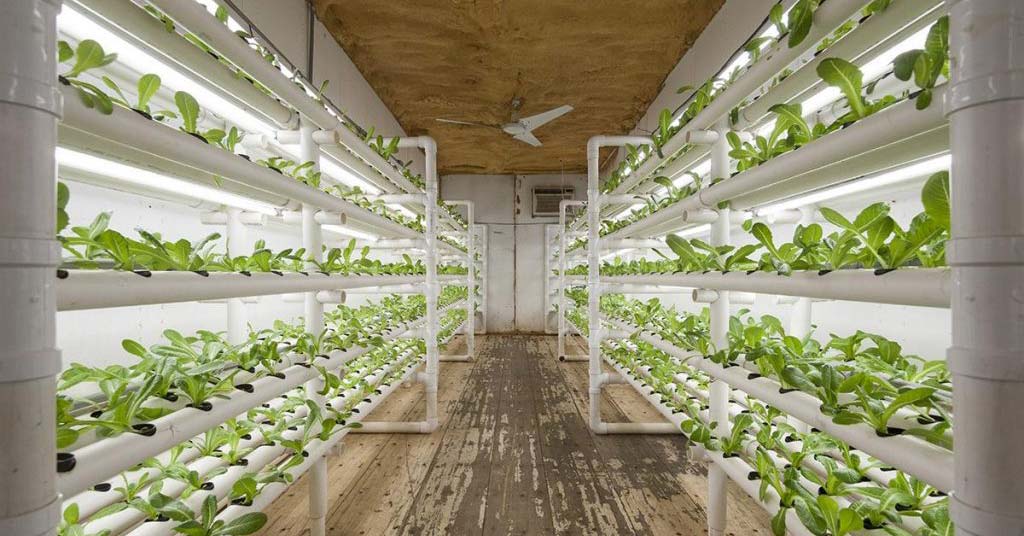
A Western Cape agri-tech company is taking a radically different approach to food production by transforming shipping containers into climate-controlled farms capable of producing fresh vegetables throughout the year.
Arable Grow, founded by Hein Duvenhage, combines hydroponic farming, renewable energy and locally developed technology to bring food production closer to urban consumers.
Rather than depending on large areas of farmland, favourable seasons and long-distance transportation, the company’s modular farms can be positioned close to population centres and operate under controlled conditions regardless of the weather.
Farming with less water and fewer resources
The container-based systems were developed with African conditions in mind and use about 95 percent less water than conventional farming.
The controlled environment also removes the need for pesticides while allowing crops to be grown consistently throughout the year.
Because the farms can operate near consumers, harvested produce can reach retailers within hours. This shorter journey helps preserve freshness, flavour and nutritional quality while reducing transportation-related emissions and food waste.
For Duvenhage, the project is about addressing a much larger challenge than simply producing vegetables.
He said the company was created around the idea of using innovation to develop solutions specifically suited to Africa, particularly in urban areas where access to highly nutritious food can be challenging.
Technology designed locally
Rather than relying primarily on imported agricultural systems, Arable Grow has developed much of its technology internally.
The company’s farms incorporate solar power, water-recovery systems and measures designed to maintain production during electricity disruptions, including load shedding.
These features allow the facilities to operate with greater independence while reducing their reliance on increasingly scarce resources.
Sustainability also influences what happens to crops that are not sold immediately.
Production is matched as closely as possible to demand to prevent unnecessary waste. When surplus produce remains, the company dehydrates it and converts it into nutrient-dense superfood powder, extending its usable life while creating another revenue stream.
Taking urban farming into schools
Arable Grow’s activities extend beyond commercial food production.
The company works with Beaumont Primary School in Somerset West, where students are introduced to urban agriculture and exposed to alternative approaches to food production.
The initiative is intended to help young people understand how technology and sustainability could reshape agriculture in the future.
Turning innovation into a viable business
Developing the farming technology was only one part of the challenge.
For an emerging company introducing an unfamiliar agricultural model, gaining access to established markets, meeting strict food-safety requirements and convincing retailers to embrace a new supply system can be equally demanding.
That is where SPAR became an important partner for Arable Grow.
The partnership has helped bridge the gap between developing an innovative farming system and successfully bringing its produce into the mainstream retail market.
