



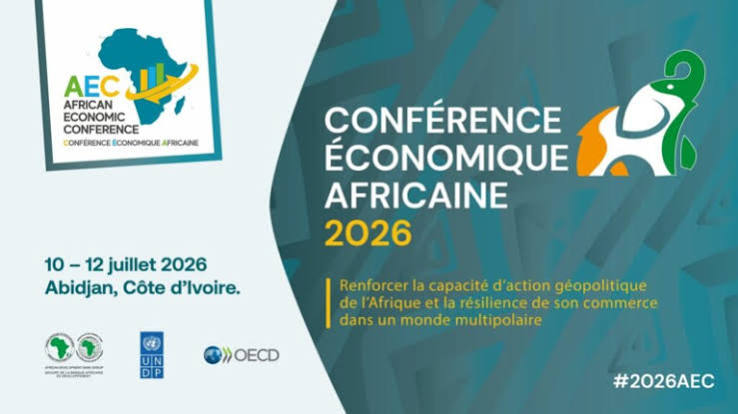
The structural relationship between Africa and the global financial architecture is undergoing a major diplomatic re-evaluation. At the 2026 African Economic Conference (AEC) in Abidjan, Côte d’Ivoire, regional policymakers, economists, and development experts issued a unified call for the continent to proactively dictate terms in a rapidly shifting multipolar global order.
Under the theme “Strengthening Africa’s Geopolitical Agency and Trade Resilience in a Multipolar World,” the three-day summit focused on transitioning African economies from passive recipients of global aid to active architects of international supply chains.
Reforming the African Financing Architecture
A central theme of the summit was the urgent need to deepen domestic capital markets to reduce exposure to volatile foreign debt. Under the AfDB’s New African Financing Architecture for Development (NAFAD), the bank is pushing for a complete overhaul of how development capital is mobilized and deployed across the continent.
“Africa can no longer be viewed merely as a reservoir of raw materials. We must be recognized as a key player in global supply chains, a hub for industrialization, and a force capable of defending its interests.” — Souleymane Diarrassouba, Côte d’Ivoire’s Minister of Planning and Development
From Vulnerability to Strategic Autonomy
AfDB President Sidi Ould Tah urged leaders to move away from historical narratives of economic vulnerability. Instead, he emphasized building competitive, self-sufficient regional economies. This shift is supported by several new institutional developments designed to improve governance and policy execution:
-
The African Chief Economists Network (ACE Network): A newly launched collaborative platform designed to align national monetary and fiscal policies across trade corridors.
-
Specialized Policy Academies: The graduation of new cohorts from both the Public Finance Management Academy for Africa and the Macroeconomic Policy Management Academy for Africa, aimed at strengthening public administration capabilities.
-
Natural Resource Governance Frameworks: New anti-corruption and contract-transparency initiatives to help African nations secure better returns on critical minerals like lithium, cobalt, and copper.
By building stronger regional trade ties, standardizing customs compliance under the AfCFTA, and training a new generation of public finance professionals, the continent is laying the foundation to protect its economic interests. Ultimately, the consensus from the 2026 AEC is clear: Africa’s long-term prosperity depends on its ability to leverage its massive natural resources and young workforce to negotiate from a position of absolute parity on the global stage.
