


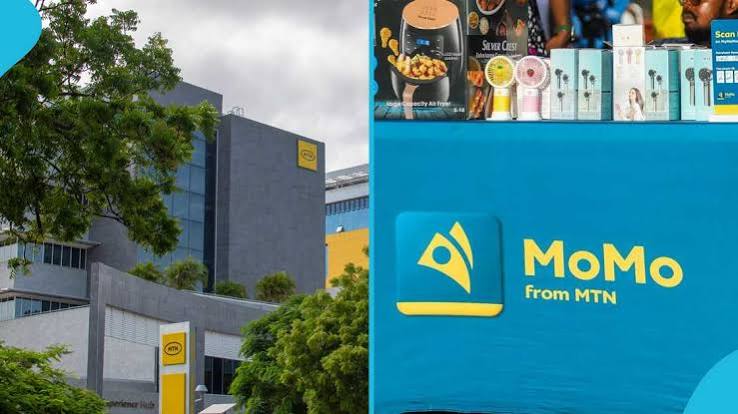
Clydestone Ghana has filed a high-stakes lawsuit against Africa’s largest telecommunications operator, MTN Group, along with its Ghanaian subsidiary and MobileMoney Fintech Limited (MMFL), alleging that its proprietary intellectual property was unlawfully used to build MTN Mobile Money (MoMo)—now one of the continent’s most successful digital payment platforms.
The company confirmed in a July 28 statement that it had formally commenced legal proceedings by filing a writ of summons and statement of claim at Ghana’s High Court on July 27.
The Players
Clydestone Ghana, part of the wider Clydestone group with offices in Ghana, Nigeria, and Kenya, holds the distinction of being the first IT and fintech firm to list on the Ghana Stock Exchange. It is widely recognized as a pioneer in digital banking and electronic payments in the region.
MTN Ghana, a subsidiary of Johannesburg-based MTN Group, dominates Ghana’s mobile telecommunications and digital services landscape. MMFL, the dedicated fintech company operating the MoMo service, was originally part of MTN Ghana but was spun off as an independent entity to comply with local regulations under the Payment Systems and Services Act.
The Allegations
According to Clydestone, MTN Ghana approached the company in 2007 to develop a comprehensive commercial and operational blueprint for launching a mobile money business in Ghana. The work—authored by Clydestone’s founder and group CEO, Paul Jacquaye—allegedly encompassed the commercial model, operational architecture, implementation methodology, and supporting business case for a full mobile money ecosystem.
Clydestone claims the work was delivered on the understanding that a non-disclosure agreement (NDA) and memorandum of understanding (MoU) would be executed to govern its use. However, the company asserts that despite repeated requests and promises, these agreements were never finalized.
The crux of the claim is that MTN Ghana subsequently used Clydestone’s IP, confidential commercial information, and operational intelligence without authorization or compensation. Key elements of the model were later incorporated into MTN Mobile Money Ghana and reportedly deployed across multiple African jurisdictions—all allegedly derived from the commissioned work.
New Evidence Comes to Light
While Clydestone alleges that the wrongful use of its work has persisted since MoMo’s 2009 launch, the full extent of the misappropriation was not publicly quantifiable due to a lack of available information—until 2026. The company cited two internationally recognized publications that, for the first time, publicly documented MoMo’s full scale and commercial significance:
-
GSMA’s State of the Industry Report on Mobile Money 2026 (March 2026), which confirmed Ghana as the world’s highest-ranked mobile money regulatory market.
-
MTN Ghana’s 2025 Annual Report (March 2026), which revealed that MoMo had approximately 19.3 million active users and annual revenue of roughly GHS 6 billion (USD 513 million).
Clydestone stated: “The company has received neither payment nor acknowledgment from any defendant in respect of the commissioned work since December 2007. Pre-action correspondence issued by the company’s legal counsel in 2026 received no substantive response from any defendant.”
Claims and Remedies
The company is seeking relief including declarations, damages, and equitable remedies.
Paul Jacquaye, Clydestone’s founder and group CEO, commented: “This case is about accountability for commissioned intellectual property. MTN approached Clydestone, commissioned our work, and received the benefit of that work. When independent publications during 2025 and 2026 revealed the full extent of the Mobile Money business, we revisited every document relating to the original engagement. That review convinced our Board that these proceedings were both justified and necessary.”
