



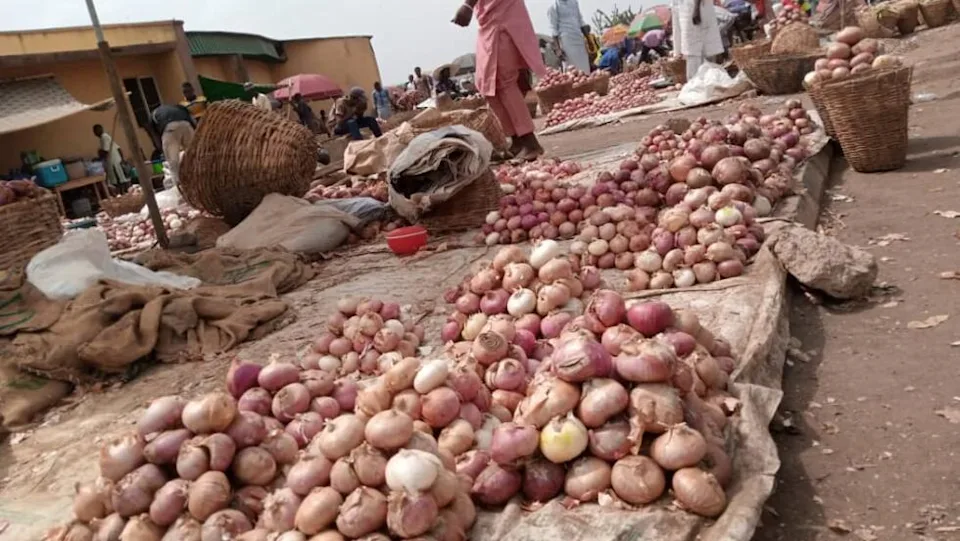
A trade row over onions has laid bare a deeper tension in West African commerce: free movement of goods looks good on paper, but protectionist instincts and informal barriers often tell a different story.
The dispute centred on how Nigerian onions were sold in Ghanaian markets — and at what price. Nigerian traders were setting their own prices, a practice that angered their Ghanaian counterparts, according to David Olujinmi, an economic analyst at SBM Intelligence in Lagos.
“They believe the Nigerians are coming in with their products and driving down prices because the onions they sell are offered at a much lower price,” Olujinmi said. “Onions produced in Ghana are therefore not competitive with those that Nigerians bring onto the Ghanaian market.”
The standoff was eased on August 19, when Nigeria’s National Onion Producers, Processors and Marketers Association (NOPPMAN) announced it was lifting its suspension of onion exports to Ghana with immediate effect. The move followed consultations with both governments, the Economic Community of West African States (ECOWAS), and other stakeholders.
But for Olujinmi, the episode raises broader questions about the limits of free trade within Africa — particularly given Nigeria’s large trade surplus with West Africa.
“Nigeria does not buy a great deal from other countries, but it sells them a lot of products. Our currency [naira] is probably the weakest in the region, which makes our products more competitive in terms of price than products made in those countries.”
Protectionist Pressure
Trade needs to work both ways, Olujinmi argued, noting that countries like Ghana come under political pressure to shield their own producers.
“All these pressures lead to some of the situations we have seen, such as these informal restrictions,” he said.
Paul Akande, a programme officer for aquaculture development at the ECOWAS Commission, believes the dispute does not require a new agreement. Both countries are already bound by the regional body’s free trade rules, he said — the priority is to better inform businesses and remind them of the rules that already exist.
“There needs to be more awareness and information,” Akande said. “We need to remind people that we belong to the same trading area and have the right to trade freely under ECOWAS free trade mechanisms.”
That awareness, he added, should extend across the entire trading chain.
