
An African startup support organisation is taking aim at one of the continent’s most stubborn obstacles: the difficulty entrepreneurs face in finding funding, customers and expertise across fragmented markets.
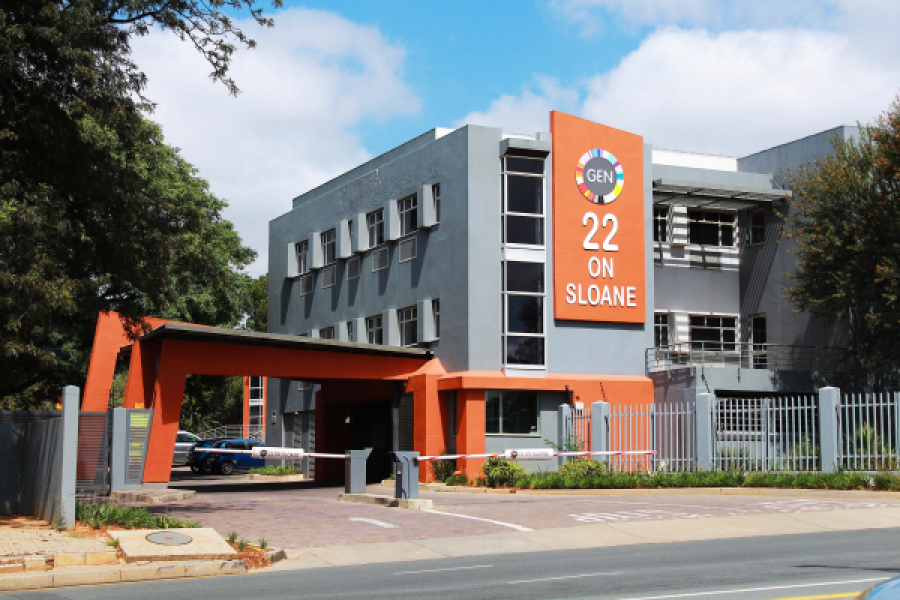
22 On Sloane launched KUMii, an AI-powered platform, in Cape Town this week. The tool is designed to help African startups and small businesses navigate the continent’s scattered ecosystem of funding, markets, mentorship and business support.
The launch coincides with a far larger financial goal. Through Sloane Capital, 22 On Sloane says it is raising R1 billion ($63 million) to invest in startups and micro, small and medium-sized enterprises across Africa.
Both moves target a practical reality: businesses expanding across the continent must contend with differing regulations, currencies, procurement systems, funding networks and support programmes, many operating independently of one another. For entrepreneurs, locating the right opportunities can be as hard as securing the resources themselves.
Jonathan Ortmans, founder and president of the Global Entrepreneurship Network, laid the challenge bare on Wednesday at GEC+Africa 2026, a Pan-African summit for startups and investors.
“Never has the entrepreneurial economy created more value. But never has it created that value in so few places,” he said, pointing to the growing concentration of startup growth and late-stage capital in a handful of ecosystems.
His remarks came on the opening day of the GEC+Africa Summit in Cape Town, where 22 On Sloane unveiled KUMii — an AI-powered platform connecting Africa’s entrepreneurs to funding, markets, mentorship, learning and business tools. The organisation also announced plans to raise R1 billion ($63 million) through Sloane Capital to back startups and MSMEs across the continent.
22 On Sloane views the two initiatives as parts of a single strategy: giving African entrepreneurs access to new pools of capital and better digital infrastructure, while linking them to resources already present across the ecosystem.
“Africa’s paradox represents one of the most compelling economic contradictions of the 21st century,” said Kizito Okechukwu, executive head of 22 On Sloane. “The continent holds immense structural opportunity, yet this opportunity is consistently constrained by internal and external fragmentation.”
African businesses grapple with expensive borders, uneven regulations and weak infrastructure, while entrepreneurs often must navigate a maze of disconnected programmes, funders, tender portals, mentors and business services.
Norma Ngobane, CEO of KUMii, said the platform is meant to make connections between entrepreneurs and the ecosystem more practical.
“Funding and finding customers is often fragmented. Entrepreneurs are navigating multiple platforms and different environments to find the right support, funding and customers,” she stated.
KUMii lets businesses create profiles and use AI-powered matching to identify relevant funders and investment opportunities. Its market-access tools match businesses with tender and procurement opportunities, while business-readiness tools help entrepreneurs develop documents such as business plans and prepare for funding. The platform also offers mentorship, learning resources and access to business software. More than 4,000 startups and MSMEs have already registered, according to 22 On Sloane.
“We want to make the ecosystem easier to navigate, easier to participate in and more capable of converting support into meaningful business growth,” Ngobane said.
22 On Sloane revealed that Sloane Capital, a startup and MSME investment fund, has secured a Category II licence and a National Credit Regulator licence. It is now raising R1 billion ($63 million) to finance startups and MSMEs across Africa, with the goal of moving businesses beyond investment readiness toward growth and scale.
“We need to think of better financial instruments and alternative methods to ensure that capital reaches each and every entrepreneur that needs it,” Okechukwu said.
As global capital flows toward AI and a small number of dominant ecosystems, that challenge grows more urgent. Ortmans noted that about two-thirds of the rebound in global startup ecosystem value over the past year landed in three United States cities, while close to nine in every 10 late-stage dollars is flowing into AI.
His concern is not that Africa cannot compete, but that the current concentration stems from choices rather than an immutable law. “The narrowing is not a law. It’s a result, and results can be changed,” he said.
