

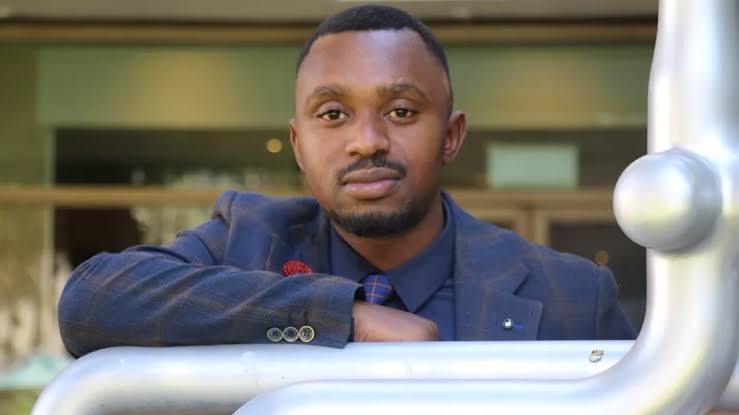
What began as a personal struggle to communicate with his deaf parents eventually became a technology project that attracted national attention and opened the door to a much broader entrepreneurial career for South African innovator Mushudu Lucky Netshidzati.
Netshidzati, who grew up in Limpopo, became widely known after developing smart gloves designed to convert sign language movements into spoken language.
His motivation was deeply personal.
Both of his parents were deaf, and communication difficulties shaped much of his childhood. He was eventually raised by his grandmother, while his siblings, who did not have hearing disabilities, also grew up alongside the family.
Rather than allowing the communication barrier to remain only a personal challenge, Netshidzati began looking for a technological solution.
That idea eventually became Communicare, a smart-glove system capable of detecting hand movements and translating South African Sign Language into spoken language.
From invention to entrepreneurship
Netshidzati did not follow a conventional university-to-career route. Instead, he developed his professional experience through employment, independent projects and years of experimentation with technology and business ideas.
His career included administrative and management positions before he increasingly shifted his attention towards developing his own products and companies.
Among his earlier ventures was Rudzambilu Holdings, which explored ways of incorporating South African Sign Language into telecommunications and making communication technology more accessible to people with disabilities.
The company’s ambitions extended beyond South Africa, with partnerships involving organisations in Canada and India.
In 2021, Netshidzati co-founded Shudu Connections, a technology and consumer-focused business based at Gauteng’s Innovation Hub.
The company would go on to work across several areas rather than concentrating on a single product.
Building beyond the smart glove
Shudu Connections developed Care Runners, an app-based delivery service designed to handle same-day deliveries of parcels, documents, groceries and other items across Gauteng.
Another platform, TractionLog, was created to help business incubators, accelerators and development organisations monitor the progress of small and medium-sized enterprises.
The platform turns business and programme data into dashboards intended to provide organisations with clearer information about company growth and the effectiveness of their support programmes.
Shudu Connections has also explored artificial intelligence and digital services, including Yandasm, an AI-powered mental wellness application.
Its portfolio has extended even further into consumer products, with the company also introducing bottled water under the Thwee Drops brand.
Alongside its own products, the business has provided services such as software development, website development, hosting and cloud solutions.
Its reported clients and partners have included institutions and companies such as the University of Pretoria, Ozow, Blind South Africa, AfriLabs and Telkom FutureMakers.
The invention that started it all
Netshidzati’s best-known innovation remains the Communicare smart glove, which he began developing in 2015.
The technology uses sensors positioned in the fingers to measure how they move, while a gyroscope tracks the orientation of the user’s hands.
Those movements can then be processed to interpret South African Sign Language and convert the information into spoken communication.
The invention earned Netshidzati considerable attention and was later patented.
In 2019, he won the top prize at a State IT Agency hackathon in Durban for the invention, further increasing interest in the technology.
At the time, Netshidzati estimated that around R15 million would be needed to take the product through further development and prepare it for commercialisation.
Despite interest from potential customers, securing sufficient investment proved difficult.
By 2020, he was still seeking funding to advance the glove and other technologies aimed at improving communication for people with disabilities.
A bigger vision for accessible technology
The smart glove was never intended to be the final destination for Netshidzati.
He has previously discussed developing technologies capable of replacing the physical glove altogether, including systems that could use cameras to recognise hand movements and convert signing into speech.
That vision reflects a broader goal behind his work: using technology to reduce the communication gap between deaf and hearing communities.
What makes Netshidzati’s story particularly notable is the connection between his personal experience and his entrepreneurial ambitions.
A problem he encountered while growing up became the starting point for an invention. That invention evolved into a wider interest in technology, and eventually into a company working across software, artificial intelligence, consumer products and digital services.
His journey illustrates how personal challenges can sometimes become the foundation for technological innovation, particularly when entrepreneurs are able to turn those experiences into solutions that address problems faced by wider communities.
