


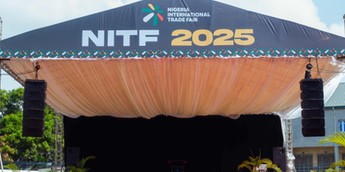
The long-anticipated return of the Lagos International Trade Fair has become a defining moment for Nigeria’s commercial landscape, reigniting Lagos’s reputation as a dominant trading centre and gateway for regional commerce across West Africa. Speaking with Business Insider Africa, Barrister Vera Safiya Ndanusa, Executive Director of the Lagos International Trade Fair Complex Management Board (LITFCMB), described the fair’s comeback as a major victory for the nation’s business community and a catalyst for renewed economic activity.
Ndanusa highlighted that the fair acts as a crucial marketplace where entrepreneurs, manufacturers, and innovators can converge under one roof. With exhibition spaces offered at accessible rates, both emerging and established businesses are able to showcase their products, exchange ideas, forge partnerships, and connect with thousands of potential buyers. Beyond its economic role, she emphasized the fair’s importance as a learning platform—creating opportunities for smaller enterprises to gain exposure, observe industry trends, and benefit from the expertise of seasoned professionals.
Reaffirming Lagos’s identity as the pulse of West African trade, Ndanusa pointed to the strategic positioning of the Trade Fair Complex. Located along the vibrant West African corridor and easily connected to major highways, ports, and borders—including routes frequented by ECOWAS traders—the complex strengthens Nigeria’s role in cross-border commerce. She noted that ongoing reforms in customs and immigration have eased historic bottlenecks, making movement of goods and people faster and significantly more efficient.
Ndanusa also underscored the importance of maintaining the large, upgraded facility as a national asset. The complex hosts Africa’s biggest tire market and West Africa’s most prominent jewellery marketplace—both of which support thousands of livelihoods. She called for consistent support from federal and state authorities to ensure the infrastructure remains functional, competitive, and capable of meeting growing commercial demands.
Security remains at the heart of the relaunch strategy. With a permanent presence of various security agencies, including the Department of State Services (DSS), visitors and traders can expect a safe, well-coordinated environment. Ndanusa noted that the reinforced security systems not only safeguard lives and property but also strengthen investor confidence and create a reliable atmosphere for large-scale business activities.
As the fair resumes its role as a hub for innovation, trade, and regional integration, Lagos is once again positioning itself at the forefront of West African commerce—bringing renewed optimism to Nigeria’s entrepreneurial and industrial sectors.
