



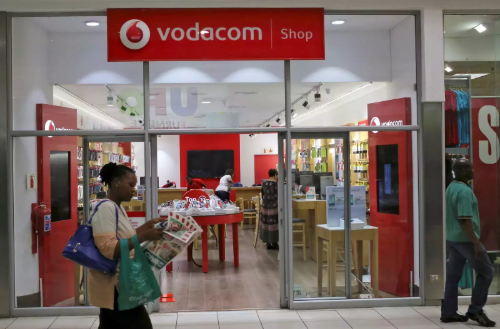
Vodacom Group is currently engaged in early-stage discussions with the Kenyan government about the potential purchase of an additional stake in Safaricom, according to individuals with direct knowledge of the matter. Although Vodacom already holds close to a 40% share of Safaricom—Kenya’s most valuable publicly traded company—the South African telecoms giant is exploring the possibility of increasing its ownership to deepen its influence in one of Africa’s most profitable mobile markets.
The talks remain confidential, and none of the involved parties have issued formal statements. However, insiders suggest that both sides are weighing the financial and strategic implications. Safaricom, with a market valuation of roughly 1.19 trillion Kenyan shillings, commands close to two-thirds of Kenya’s mobile telecommunications industry, making it a significant asset for any investor and a cornerstone of the country’s digital economy.
For the Kenyan government, a partial sale of its lucrative shareholding could help generate much-needed revenue at a time when the nation faces rising debt repayment obligations and continues to navigate a widening fiscal deficit. Monetising part of its 35% stake may offer a viable avenue for strengthening public finances without resorting to heavy borrowing.
Vodacom has a history of expanding its exposure to Safaricom. In 2017, the company increased its stake through a strategic share swap with Vodafone, its UK-based parent company. Today, both Vodacom and Vodafone are focused on accelerating the growth of M-Pesa, the mobile-money service that dominates digital payments across East Africa and continues to be one of Safaricom’s most successful business segments.
Recent remarks from Kenya’s Treasury Secretary, John Mbadi, revealed that the government previously explored the idea of restructuring Safaricom into three operational units as part of its broader review of state-owned assets. This restructuring could have reduced the government’s stake, though Vodacom has made it clear that M-Pesa—Safaricom’s crown jewel—will not be spun off under any circumstances.
The ongoing discussions highlight Safaricom’s dual importance: it is both a key source of revenue for Kenya’s public finances and a centerpiece of Vodacom’s regional expansion strategy. As negotiations progress, stakeholders across East Africa’s telecoms and financial sectors are closely watching how the potential transaction could reshape the future of one of the continent’s most influential mobile operators.
