
I grew up in a Lagos neighbourhood where every street had that one man people quietly agreed was “the real money.” In our case, his name was Kunle. Oil & gas man. The kind of guy whose generator never went off and who bought the first satellite dish on the street when the rest of us were still adjusting rabbit-ear antennas.
Whenever the community had a big project — fix the transformer, repair the gate, contribute for new streetlights — everybody would look in Kunle’s direction. And, to his credit, Kunle understood the assignment. He would drop the first ₦200,000 without blinking and say, “Make una complete am.”
Once Kunle contributed, the rest of the street relaxed. People who had been forming busy suddenly found their wallets. The project always got done.
Years later, as I began working across angel investing, SME finance, and alternative investment structures, it hit me: what Kunle was doing is exactly what the development world now calls blended finance.
It’s funny how the world gives fancy names to things Nigerians have intuitively understood for decades.
Blended Finance 101
Blended finance, when you strip away the jargon, is simply when one source of capital — usually public or philanthropic — steps in first to reduce the risk or cost of a project so that private investors can confidently come in after. It is the “Kunle contribution” at scale. In more formal language, it’s the use of concessional capital to mobilize commercial capital.
But beyond the definition, the real power of blended finance lies in what it makes possible.
Because here’s the truth we don’t like to admit: a lot of the sectors that matter most for Africa — agriculture, climate adaptation, healthcare, renewable energy, women-led enterprises, infrastructure — are not always “investor-friendly” from day one. They carry early risk, market volatility, regulatory uncertainty, or slow revenue cycles. Angels want to support them, but angels are human beings, and human beings have risk thresholds. Institutions want to deploy capital, but institutions have committees, checklists, and risk models that don’t always understand our messy realities.
So somewhere between the founder who is trying their best, the angel who believes but hesitates, and the institution with billions it can’t quite deploy… capital freezes.
Blended finance melts the ice.
How Catalytic Capital Unlocks What Was Always There
It says: let’s reduce the risk on the table, not by pretending it doesn’t exist, but by sharing it intelligently. Let catalytic money — grants, guarantees, first-loss capital — take the first position, the heavy lifting, the part that scares ordinary investors away. Let commercial capital then come in with confidence, clarity, and structure.
When blended finance works well, it doesn’t distort the market. It unlocks it.
I have seen founders who needed just a small concessionary push suddenly become investable. I have seen angels who would normally avoid certain sectors become enthusiastic participants because the downside was cushioned. I have seen institutions deploy faster and more flexibly because local investors were already inside the deal.
And in all of these cases, the story wasn’t about money — it was about architecture. Capital needs structure the same way a building needs beams. Blended finance is simply an architectural tool.
But here’s the part many people miss: blended finance is not just for “big development projects.” It is increasingly relevant for Africa’s startup ecosystem. The average African founder doesn’t have the luxury of years of burn or endless venture cycles. Angels, no matter how patriotic, cannot carry systemic risks alone. And DFIs, despite their resources, cannot operate effectively without local partners who understand nuance.
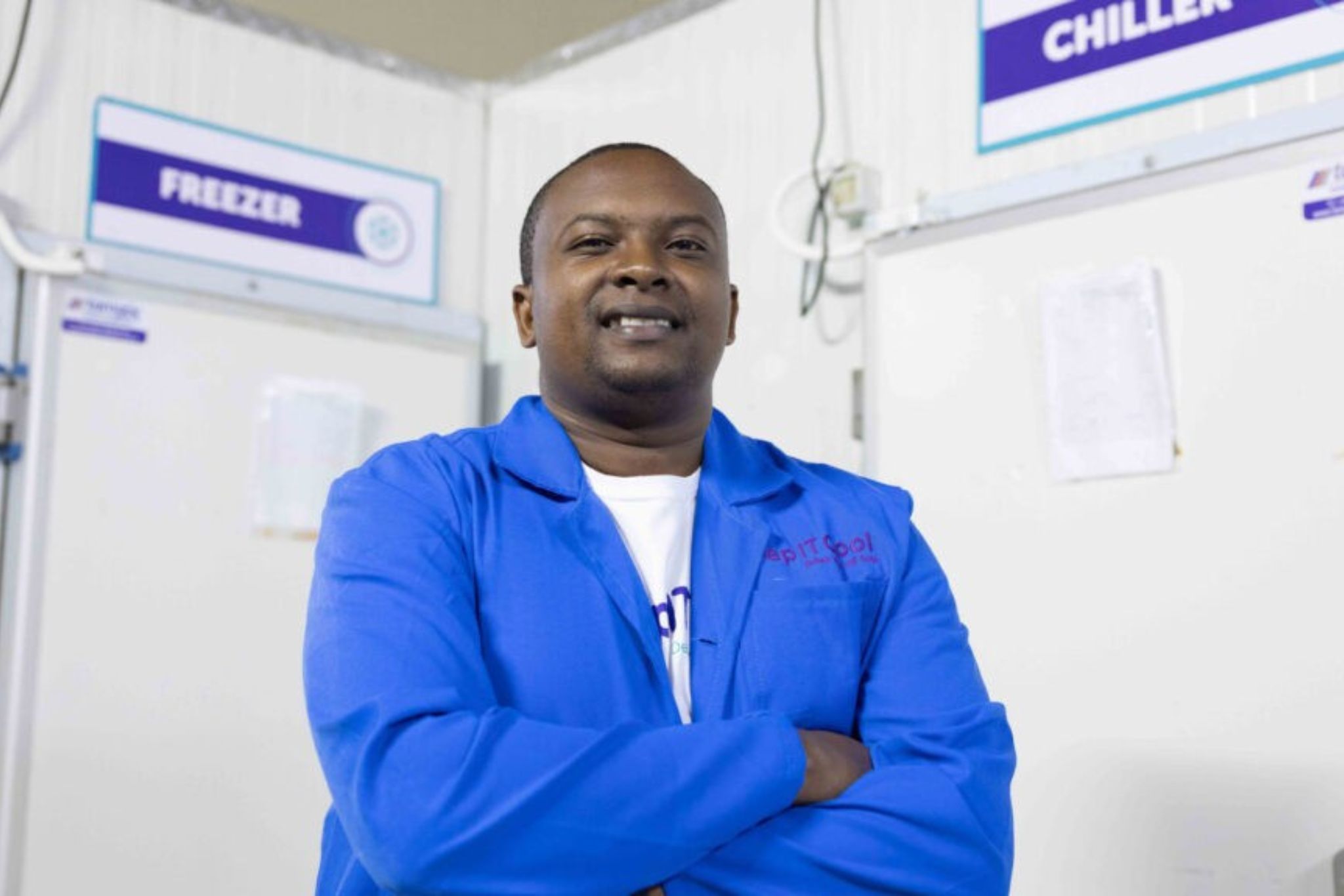
The Keep IT Cool Example
A Kenyan startup providing affordable cold storage to smallholder farmers, Keep IT Cool | Earthshot Prize Winner 24 addresses a problem that destroys billions of dollars worth of food across Africa annually: post-harvest loss. But when they started, no angel wanted to touch it. Cold chain infrastructure? In rural Kenya? The risks seemed too obvious—low margins, fragmented customer base, infrastructure challenges, long payback periods.
Then The Catalyst Fund stepped in with $200,000 in pre-seed capital—blended finance combining concessional and commercial equity. That first-loss capital wasn’t just money; it was permission for others to look again. With hands-on venture building support from Catalyst Fund, Keep IT Cool refined their model, achieved product-market fit, and went on to secure follow-on funding from Acumen and the Global Innovation Fund Facility. Today, they’re increasing smallholder incomes while reducing food waste at scale—and they won the 2024 The Earthshot Prize.
Catalyst Fund is now seeing a 90% survival rate across 80 companies, compared to the standard 40-50% survival rate for pre-seed companies. That gap? That’s the blended finance difference. That’s what happens when catalytic capital melts the ice.
This wasn’t charity saving a struggling venture—it was strategic de-risking that revealed what was always there: a sound business solving a massive problem. Keep IT Cool didn’t need to be “rescued.” They needed the capital structure to match their risk profile. Once that alignment happened, commercial capital followed naturally.
Blended Finance: The Handshake That Makes Capital Flow
Blended finance is the handshake.
The place where mission-driven capital meets market-driven capital, and both walk away satisfied.
In my work with the Lagos Angel Network and Boodl., I’m constantly reminded that Africa doesn’t have a creativity problem. We don’t have an ambition problem. What we have — and what blended finance directly addresses — is a capital structuring problem. Too often, the right people are in the room, but the money cannot flow because the risk is not aligned with the returns.
Kunle understood that money has psychology. When the first person moves, others follow. He wasn’t doing development finance; he was doing human finance.
And maybe that is the real lesson here.
Blended finance, at its core, is not about grants or guarantees. It’s about confidence. Someone has to step forward first. Someone has to say, “Let me take the early heat so the rest of you can do your part.”
Africa has never lacked potential — but potential needs momentum, and momentum often needs a catalyst.
Blended finance is that catalyst.
And as the continent continues to evolve, the founders who understand it early will raise differently, the angels who embrace it will invest more boldly, and the institutions that adapt will finally deploy capital in ways that match Africa’s energy.
Just like Kunle’s early contribution unlocked light for our street, blended finance — when thoughtfully applied — will unlock light for an entire continent.

Africa Needs Catalysts, Not Just Capital
So here’s my challenge to everyone reading this:
Founders: If you’re building in climate, agriculture, healthcare, or any sector where the risk looks scary on paper but the impact is undeniable—start asking different questions. Don’t just ask “who will invest?” Ask “who can take first-loss position so others can follow?” Structure your fundraising conversations around blended finance from the beginning. The capital is out there; you just need to architect the handshake.
Angels and early-stage investors: Identify the DFIs, philanthropic funds, and guarantors in your ecosystem. Start the conversation now. When you find a founder you believe in but the numbers make you hesitate, ask yourself: “What level of downside protection would make this investable?” Then find the catalytic partner who can provide it. You don’t have to carry systemic risk alone.
DFIs and Development Partners: If you’re not already embedding yourselves in local angel networks and early-stage ecosystems, you’re missing the entire point. Blended finance only works when you move at the speed and scale of the founders you’re trying to unlock. Stop waiting for “bankable projects” to arrive fully formed. Your job is to make them bankable.
The next wave of transformative African companies won’t be funded by angels alone, or by DFIs alone. They’ll be funded by the intelligent combination of both—structured around shared risk, shared belief, and shared upside.
Blended finance isn’t just a tool. It’s a mindset. And the continent that learns to deploy it early will be the continent that scales first.
Who’s Ready to Be the Kunle in Their Ecosystem?
Founders, funders, angels, DFIs — you’ve all felt the friction points. Everyone has had a “Kunle moment,” that one catalytic push that made the rest possible.
Where have you seen blended finance work well… or fail to show up when it was needed? And where do you think Africa needs its next catalytic push?
I’m genuinely interested in what you see from your vantage point. Your experiences will help shape a better architecture for all of us.
