
Partech has successfully closed its second Africa fund, Partech Africa II, at €280 million ($300 million+), just one year after reaching its initial first close. At this final size, Partech Africa II solidifies its position as the largest fund specifically dedicated to African startups. The fund had initially targeted a smaller size of €230 million before its fundraising campaign began.
This fund closure is particularly significant against the current backdrop of global venture capital firms and institutional investors reducing their exposure to Africa. The continent experienced a notable decline in overall investor activity in 2023, with a 50% decrease in deal volume compared to the previous year, as documented in a report by Partech. This global retreat, influenced by worldwide economic shifts and persistent local challenges, resulted in a reduction of venture capital inflows for African startups, totaling between $2.9 billion and $4.1 billion last year, down from the $4.6 billion to $6.5 billion raised in 2022.
The negative impact was broadly distributed across all major investment stages. According to Partech’s own findings, seed-stage deals saw a 33% decline, and growth-stage deals dropped by 39%. While Partech Africa, which is well-known for leading funding rounds, cannot single-handedly reverse this overall downward trend, its broad investment focus, spanning from seed to Series C rounds, is expected to offer crucial stability and much-needed capital support for startups navigating these demanding times.
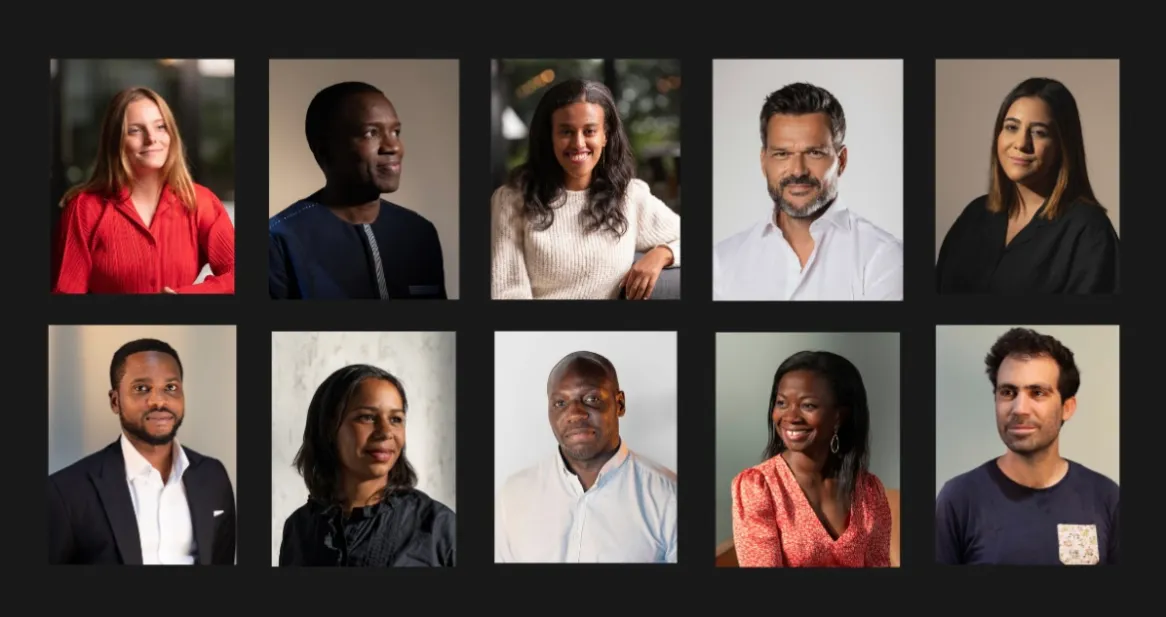
Partech Africa’s general partners have communicated that they intend to support founders at various stages of their growth journey, from the earliest stages to later rounds, leveraging the firm’s well-established position within the ecosystem. Cyril Collon emphasized this commitment in a statement, saying, “The capacity to anchor rounds at all stages from seed to early growth, is more critical than ever.”
In an email communication, Tidjane Deme, a key leader at the firm, confirmed that Partech Africa’s expanding team will be essential in effectively deploying the secured capital and providing robust assistance to portfolio companies across these multiple stages. The firm maintains offices in Dakar, Nairobi, and Dubai, and has recently opened a new presence in Lagos, Nigeria, where it is actively hiring staff. This expansion underscores Lagos’s importance, as one-third of the firm’s current portfolio companies are based in the city. Deme clarified that, while the fund is stage-agnostic, the majority of its second fund’s capital will likely be deployed between Series A and B rounds.
Among the early investments already made from its second fund is Revio, a payment orchestration platform based in South Africa. Partech Africa co-led the seed round for Revio alongside the global fintech fund QED. Additionally, the firm has made undisclosed investments in an Egyptian proptech firm and a Senegalese e-commerce startup. Partech Africa intends to back over 20 companies in total, with initial investment checks expected to range from $1 million to $15 million, as disclosed by the firm.
The Dakar-based venture capital firm, which backed 17 startups in its inaugural fund, prioritizes sectors that are critical drivers of Africa’s employment and economic activity. These include fintech, agtech, health tech, retail, Fast-Moving Consumer Goods (FMCG), and agency banking. Notable successful investments from the first fund include Wave, TradeDepot, Yoco, and Reliance. Regarding the deployment strategy, Deme commented, “Companies from the first fund can benefit from follow-on capital from the first fund but not from the second one. We keep supporting Fund 1 companies through their journey with capital and in many other ways.”
Partech Africa’s investor base for its second fund is diverse and sophisticated. During its first close, limited partners included development finance institutions, commercial investors, African fund-of-funds, and European family offices. For the final close, the fund attracted participation from U.S. and Middle Eastern pension funds, sovereign wealth funds, the Dubai Future District Fund (DFDF), and the African Reinsurance Corporation (Africa Re). Collon acknowledged the strong backing, remarking, “We are grateful for the support and commitment of our investors: Almost all Fund I investors reinvested, and some more than doubled their commitment.” He added, “We are also honored to get the support from a new set of strategic investors from the U.S., the Middle East and Africa, and for some of whom, this marks their first commitment in African tech.”
Partech’s African fund is one of several large and notable funds that have successfully emerged on the continent over the past year. This success comes despite significant challenges faced by fund managers in raising capital, as limited partners globally are intensifying their scrutiny of investment strategies and historical track records. Other sizable funds include Norrsken22, Al Mada, and Novastar’s Africa People + Planet fund. Additionally, other firms such as Enza Capital, Equator, Knife Capital, and the E3 Low Carbon Economy Fund for Africa (E3LCEF) have also achieved sizable fund closures, collectively reflecting continued and strong institutional investor interest in Africa’s long-term growth potential and technological future.
