


The Judith Neilson Foundation, an Australia-based philanthropy, has teamed up with the Million Lives Collective (MLC), a global network that supports scaled social ventures, to launch a new funding initiative: the African Cities Innovation Fund. This fund is specifically designed to back tech-enabled urban solutions in African cities where infrastructure development is struggling to keep pace with rapid population growth.
Unveiled in Nairobi on Wednesday, the fund will issue grants of up to $75,000 to joint teams creating digital and infrastructure tools focused on critical urban challenges, including transportation, climate stress resilience, and access to basic services.
Addressing Africa’s Urbanization Challenge
The launch of the fund is timely, as African cities are currently undergoing the fastest urbanization rate globally, with the urban population expanding at approximately 3.5% per year. Projections indicate that the continent’s urban population is set to double to roughly 1.4 billion people by 2050. Public infrastructure and services have consistently lagged behind this exponential growth.
This challenge is compounded by a cooling venture capital environment. African startups raised about $2.2 billion in 2024, a drop of over 20% from the previous year, with early-stage and non-fintech sectors, like civic and climate tech, experiencing the most severe funding crunch.
The Focus: Collaboration Over Solo Efforts
The African Cities Innovation Fund is an experiment in a shifting donor landscape. It moves away from backing individual startups toward testing whether collaborative partnerships—involving startups, civic groups, and governments—can unlock large-scale solutions without relying on heavy capital investment.
-
Grant Structure: Each grant will support the design and pilot of one collaborative project, explicitly forbidding single organizations from applying alone.
-
Integrated Problem-Solving: Organizers stress that complex urban problems—like housing, transport, and climate stress—rarely fit within one single sector. The fund requires applicants to combine skills across civic groups, startups, and public agencies from the outset.
-
Core Focus Areas: The fund will prioritize solutions in areas such as climate-resilient infrastructure, youth mobility, digital access, and community wellbeing.
Jite Phido, Senior Program Manager at the MLC and Results for Development, noted that innovators and public sector actors are already finding new ways to improve services and build resilience across the continent.
Support and Timeline
Selected teams will receive more than just funding; they will also benefit from technical support, including coaching on partnerships and exposure to global development funders via the International Development Innovation Alliance’s (IDIA) collaboration lab. The aim is to test not only the viability of the idea, but also the durability of the partnership under real-world conditions.
The Million Lives Collective has prior experience running similar collaboration grants, predominantly in the health sector. The shift into cities is intended to test how their model works where local trust, logistics, and public authority are crucial factors for scaling. As evidenced by a past participant, Kenya’s 4Life Solutions, which provides safe drinking water, partnerships with local institutions were critical for driving uptake and behavioral change.
Key Dates:
-
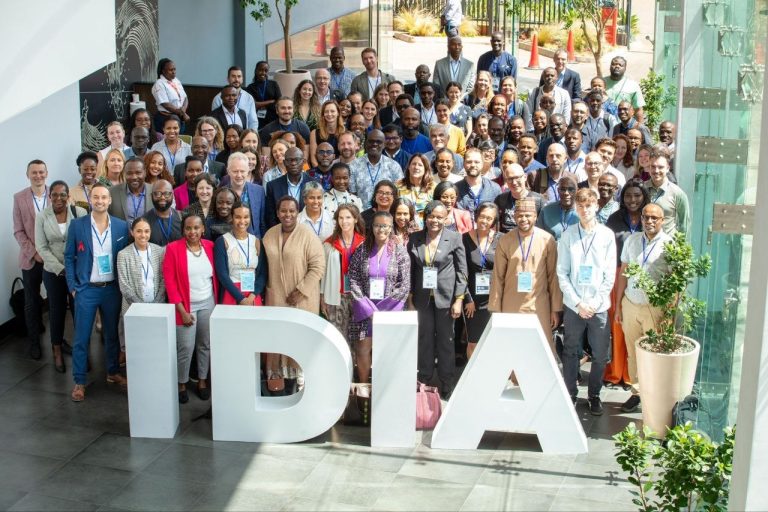
The fund was announced at the IDIA global summit at the CcHub-backed iHub in Nairobi.
-
Applications for the grants will officially open in March 2026.
-
A separate call for new members to join the Million Lives Collective will open in January 2026.
