



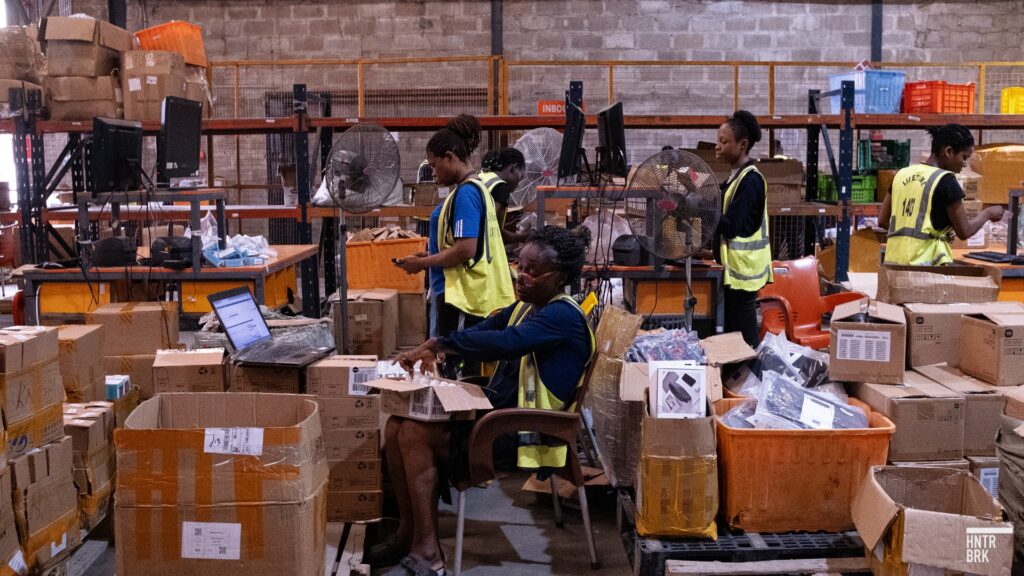
Africa’s most intense Black Friday story isn’t happening in a neon-lit mall or through a frantic midnight stampede—it’s unfolding inside a sprawling warehouse on the outskirts of Lagos. In Isolo, Jumia’s massive 30,000-square-meter fulfillment hub has evolved into the central engine powering one of the continent’s biggest shopping moments.
Entering the warehouse feels like stepping into a self-contained universe where every corner hums with activity. The space is a coordinated storm of movement—workers in bright vests weaving between towering stacks of home appliances, food supplies, and consumer electronics. Teams operate around the clock, supported by refueling breaks in the canteen, weekly fruit distributions, and even a Friday DJ set to keep morale high during the shopping surge.
“This is when everything intensifies,” explains Richmond Carlos Otu, Jumia’s chief supply chain officer. “We run rotating shifts to keep the momentum strong without overwhelming the team. The excitement comes from seeing more first-time shoppers joining the platform each year.”
A short drive away, at one of Jumia’s busiest pickup stations in Yaba, the Black Friday momentum continues. Vendors arrive steadily with goods ranging from beauty products to air conditioners, while staff race to match parcels with customers waiting eagerly at the counter. One loyal customer, Ayomide Olajide, beams as she picks up several discounted items. “I always look forward to the deals,” she says.
Yet behind the scenes lies a deeper narrative—a story of reinvention. Once celebrated as “Africa’s Amazon,” Jumia went through a turbulent collapse. Its share price crashed from over $60 to below $2, weighed down by logistics barriers and fierce competition from fast-growing Chinese players like Temu and Shein. Many doubted the company’s ability to survive.
Instead of folding, Jumia reset itself from the inside out. The old leadership, headquartered far from its main markets, was replaced. Executives relocated directly to Africa, embedding themselves in the realities of local consumers rather than applying one-size-fits-all global strategies. This shift sparked a sweeping transformation focused on affordability, relevance, and operational discipline.
The results are gradually showing. Recent market research indicates that Jumia is defending its position despite intensifying competition and may be on track for sustainable growth. The company now aims for profitability by 2027—an ambition rooted in measured, region-specific strategy rather than Silicon Valley pressure. CEO Francis Dufay frames the company’s trajectory plainly: “We could be the small MercadoLibre of Africa.”
With a current valuation of about $1.3 billion and a renewed sense of direction, the company’s comeback feels more grounded than ever. As Black Friday hits its peak, staff joke that sleep is suspended until the final order leaves the warehouse. But this year, the energy carries a different meaning—one of resilience, reinvention, and a business finally embracing what makes African e-commerce unique.
When the chaos settles and the final sale is tallied, one thing stands out: Black Friday in Lagos has become far more than a shopping ritual. It symbolizes the pulse of a company rebuilding itself, a city embracing digital commerce, and a continent pushing deeper into a tech-driven future.
