



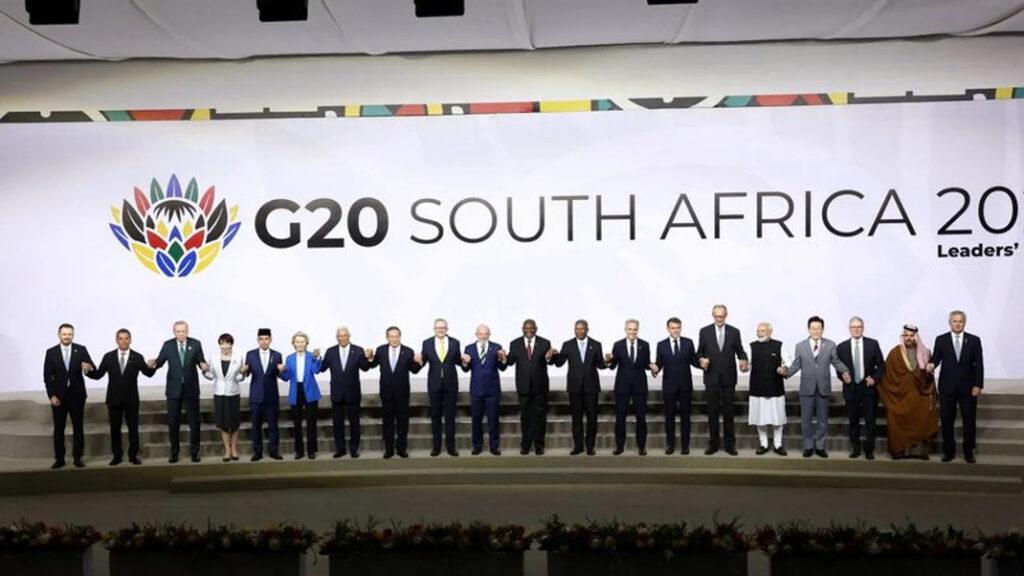
G20 leaders reached an unexpected breakthrough on Saturday after adopting a consensus declaration on the first day of their summit in Johannesburg. The move, which bypassed the traditional practice of approving the declaration at the end of the summit, highlighted the group’s commitment to multilateral cooperation—even without the support of the United States.
South Africa’s Minister of International Relations and Cooperation, Ronald Lamola, described the early adoption as a strong demonstration of unity. According to Lamola, the content of the declaration had already been thoroughly negotiated by G20 Sherpas before the summit began, allowing heads of state to approve it quickly and confidently.
“The leaders present had been fully briefed by their Sherpas, so there was no reason to delay,” Lamola explained. He emphasized that almost all of South Africa’s key priorities—such as addressing global debt pressures and tackling high interest burdens faced by nations with similar risk profiles—were successfully included in the final document.
Lamola expressed satisfaction with the outcome, stating that the declaration contained several forward-looking commitments that could significantly benefit African countries and the broader international community.
The United States, however, boycotted the summit over disagreements related to climate policy. White House spokeswoman Anna Kelly said President Donald Trump was opposed to South Africa’s push to include language centered on climate action and other global challenges. She accused Pretoria of disrupting what Washington called the “legitimate G20 process,” and stated that Trump intends to “restore legitimacy to the G20” when the U.S. hosts the summit in 2026.
Relations between the U.S. and South Africa have been strained in recent weeks, fueled by accusations from Washington regarding alleged human rights abuses against Afrikaner farmers and South Africa’s refusal to alter the typical procedure for transferring the G20 presidency.
Despite initially declaring it would not participate at any level, the U.S. reversed its position on Friday, confirming that its embassy’s chargé d’affaires would attend on Trump’s behalf. South Africa rejected suggestions that President Cyril Ramaphosa should hand over the presidency to a diplomat instead of a head of state, calling such an expectation inappropriate.
“A president cannot hand over leadership to a chargé d’affaires at a summit hosting numerous heads of state,” Lamola asserted.
A chargé d’affaires serves as the acting head of a diplomatic mission in the absence of an ambassador.
The G20—formed in 1999—consists of 19 countries along with the European Union and the African Union. This year’s gathering is historically significant as the first G20 summit ever held on African soil, marking a milestone in the continent’s role in global governance.
