


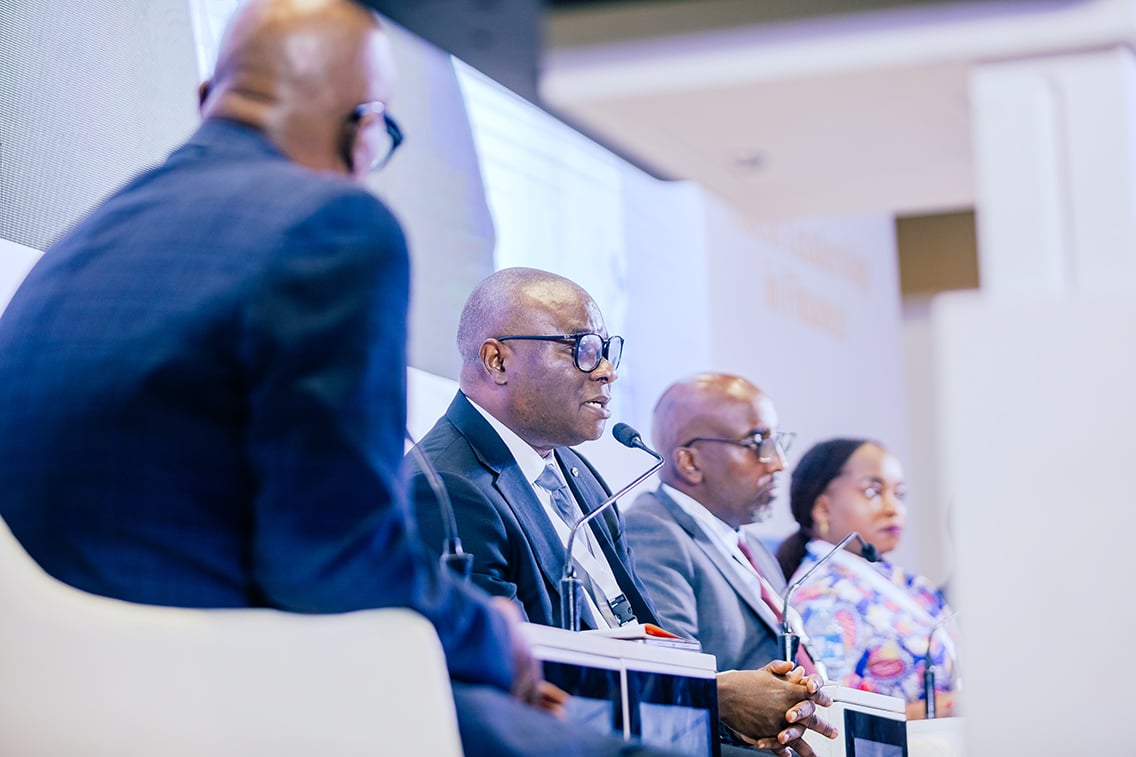
Some of Africa’s most influential chief executives and human-resource experts have mapped out a practical and coordinated pathway for unlocking the continent’s human capital, describing talent as the continent’s strongest engine for long-term development, innovation, and economic resilience. During a panel session at The African Forum for Talent Leadership in Finance, speakers emphasised that African nations possess abundant creativity and ambition, but lack the leadership systems and collaborative structures needed to convert this potential into sustained progress.
Oscar Onyema, Chairman of JEX Markets and former CEO of the Nigerian Stock Exchange, drew lessons from Asia’s success stories, explaining that countries such as China, India, and Singapore anchored leadership development in national policies. According to him, these models show how structured leadership pipelines can drive coordinated industrial growth, improve policy consistency, and support inclusive development.
“Our struggle is not a shortage of ideas,” Onyema said. “It is the lack of systems that survive political cycles and leadership transitions. When leadership becomes part of national strategy rather than personal initiative, collaboration stops being accidental and becomes an institutional norm.”
Other panellists echoed his position, noting that Africa’s transformation depends heavily on collaboration between governments, academic institutions, and private-sector leaders. Patricia Aderibigbe, Human Resources Director at the Africa Finance Corporation, argued that success must be understood as a collective ecosystem.
“From cleaners to executives, everyone contributes to progress,” she said. “Collaboration can no longer remain a buzzword. It has to become a strategic mandate for Africa’s development.”
Juliet Ziswa, Chief Commercial Officer at Exceptional Brands, highlighted the growing expectation for purpose-driven leadership. She stressed that credibility is built through action, consistency, and ethical decision-making—not lofty messaging. Ziswa also advocated the use of cross-functional teams to break organisational silos, explaining that cooperation between commercial, production, and financial units fuels innovative problem-solving.
“We often chase results without examining how they are delivered,” she said. “Shifting from ‘I’ to ‘we’ is what builds strong, future-ready institutions.”
PAC Capital Limited’s Managing Director, Humphrey Oriakhi, urged leaders to focus more on execution rather than endless policy development. “Africa is rich in ideas, but poor in implementation,” he noted. “Until our plans convert into outcomes, frameworks will remain theoretical.”
Charles Kazuka, Director of Human Capital at Shelter Afrique Development Bank, said one of Africa’s biggest obstacles is the persistent disconnect between education systems, government policy, and industry needs. He emphasised that HR professionals can help align these sectors, ensuring that education produces skills relevant to national priorities.
The panel also examined how talent development should be measured and scaled. Onyema recommended using clear metrics such as productivity, job satisfaction, and workforce participation to track progress. Aderibigbe added that human capital should be viewed as core infrastructure—just as essential as transport networks or healthcare systems. She proposed cross-border talent exchanges and apprenticeship programmes to build shared capacities across African nations.
The conversation closed with a strong consensus: Africa’s youthful population is a competitive advantage, but only if systems exist to make it productive.
“Without structured leadership, collaboration, and purpose,” Onyema said, “Africa risks missing the opportunities of the future. But with them, our potential becomes unstoppable.”
