


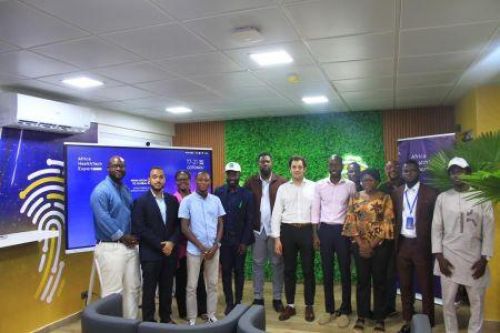
The MTN Innovation Lab in Cotonou has officially opened the Africa HealthTech Export 2025 Bootcamp, bringing together emerging startups, investors, and ecosystem enablers from several West African nations, including Côte d’Ivoire, Senegal, and Togo. The programme—organized in partnership with Benin’s innovation hub, Phi Hub—aims to accelerate the growth of digital health solutions across the region.
Created earlier this year to support Beninese startups, the MTN Innovation Lab hosted a series of intensive masterclasses delivered by both local and international specialists. These sessions explored key themes such as fundraising techniques, regional market-entry strategies, and the regulatory landscape governing digital health devices in Benin and across the West African Economic and Monetary Union (UEMOA).
During the sessions, Jean-Christian Omyale, Head of Regulatory Affairs for digital health solutions at German pharmaceutical giant Merck, emphasized that regulation should function as a catalyst for innovation—not a barrier. He noted the need for a balanced approach that encourages creativity while ensuring products enter the market under clear and safe guidelines.
Echoing this, Dr. Yossounon Chabi, Director General of the Beninese Agency for Medicines and Health Products (ABMed), broke down the regulatory frameworks that healthtech founders must understand at both national and regional levels. He explained that compliance must be considered early in product development, especially for solutions involving medical software, AI tools, mobile health applications, or IoT-enabled devices. Dr. Chabi clarified that strict pharmaceutical regulations apply only to products with proven clinical applications, a distinction that often confuses young digital health startups.
A Growing Market With Increasing Pressure
The Africa HealthTech Export 2025 programme runs until November 21 and arrives at a critical moment for the continent’s digital health industry. While the sector has attracted over $1 billion in investments in the past five years, data from Partech indicates a 70% drop in healthtech funding in 2024, highlighting a cooling investment climate. Still, the long-term potential remains significant.
Africa faces deep gaps in healthcare delivery due to shortages in hospitals, equipment, and trained personnel. The World Health Organization estimates that by 2030, the continent could face a deficit of 6.1 million health workers, a sharp rise from the 2013 projection. As a result, digital innovations—telemedicine, AI-driven diagnostics, remote monitoring systems and even drone-based medical deliveries—are seen as essential tools for bridging these systemic gaps.
To help strengthen the sector locally, MTN Benin is using its incubator to support promising healthtech ventures. Five projects were selected this year for six to eight months of hands-on incubation. Among these are Medom, a digital platform connecting patients with healthcare professionals for home-based care, and Elles, a mobile solution designed to support African women’s health needs.
Connectivity & Cost Still Limit Access
Despite the strong demand for health-focused digital platforms, widespread adoption remains limited across many African countries. Barriers such as low internet penetration, the high cost of smartphones, and expensive data plans still restrict access for millions of low-income households. Experts at the bootcamp emphasized that improving affordability and digital infrastructure is essential if healthtech is to become a long-term pillar of improved healthcare delivery on the continent.
The Africa HealthTech Bootcamp aims to address these gaps by offering a mix of training, regulatory guidance, market access, and global partnership opportunities, helping founders build scalable and compliant solutions that can compete at both regional and global levels.
