



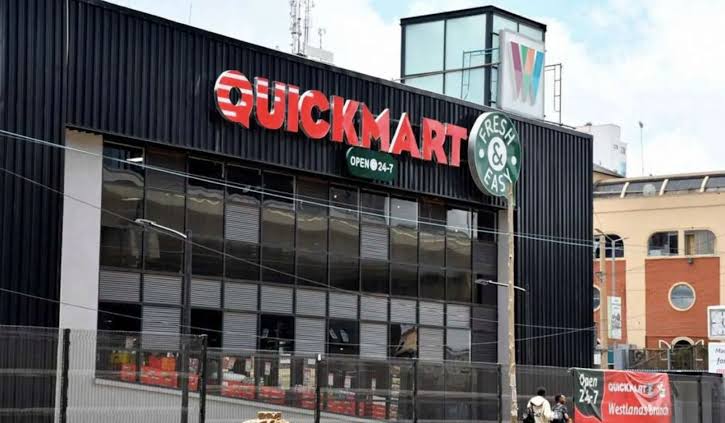
Kenyan supermarket chain Quickmart is heading to the Nairobi Securities Exchange in a move that will let private equity firm Adenia Partners and other shareholders cash in partially while keeping a meaningful stake in the business.
Under the proposed structure, Sokoni Retail Kenya will hold roughly 50 per cent of Quickmart if the additional allotment is not taken up. That figure would drop to about 42.5 per cent should the full over-allotment be exercised.
Martha Osier, a partner at Adenia, said the existing shareholder group intends to “retain a substantial interest in the Company following the Offer.” The arrangement allows Adenia and fellow investors to unlock part of their investment while still benefiting from Quickmart’s future growth.
Nearly $400 Million in Annual Sales
Quickmart pulled in approximately $389 million (KSh50.4 billion) in revenue and $13.1 million (KSh1.7 billion) in adjusted profit after tax in 2025. In the first half of 2026 alone, it recorded another $211 million (KSh27.3 billion) in revenue.
The chain runs 72 supermarkets across 16 Kenyan counties, processes about five million customer transactions monthly, and employs more than 8,000 people. It aims to open 10 to 15 new stores each year on the path to a network exceeding 100 outlets — expansion that will be funded mainly through internally generated cash rather than proceeds from the share sale.
Once listed, Quickmart’s board plans to target a dividend payout of at least 80 per cent of annual profit after tax, though actual payments will hinge on financial performance, investment needs, and board approval.
Chief Executive Peter Kang’iri said the listing “will give Kenyans the opportunity to own a share of a business they already shop in.”
Built From the Ruins of Fallen Retail Giants
Quickmart began in 2006 as a family-run supermarket in Nakuru. Adenia invested in Tumaini in 2018 and in Quickmart the following year, then merged the two under the Quickmart banner.
That investment landed during a turbulent period for Kenyan retail. Nakumatt, once the country’s dominant supermarket with operations across East Africa, collapsed under crushing debt. Tuskys followed a similar downward path, while listed retailer Uchumi struggled for years. Foreign players also found Kenya tough — South Africa’s Shoprite and Massmart-owned Game eventually pulled out, though France’s Carrefour expanded via its local franchise partner.
Quickmart seized the opening, growing from about 24 outlets after the merger to 72 stores, making it Kenya’s second-largest modern supermarket behind Naivas and ahead of Carrefour and Chandarana.
The listing would make Quickmart only the second supermarket traded on the Nairobi exchange, alongside the troubled Uchumi. It would also mark an unusual exit route for African private equity, whose fund managers typically sell portfolio companies to other funds or strategic investors because many African stock exchanges suffer from limited liquidity.
