
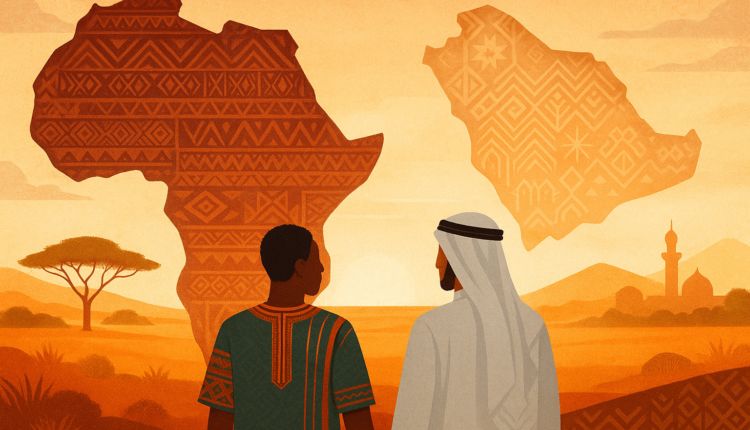
Africa and Saudi Arabia are entering a defining moment in their modern relationship, driven by a global movement toward south-south collaboration, youth-led innovation, and long-term investment in human capital. This relationship has evolved beyond traditional diplomacy into a strategic alignment shaped by the two youngest, fastest-growing populations in the world, who increasingly recognize their shared future. Saudi Arabia’s Vision 2030 agenda has strongly prioritized deepening ties with African markets, channeling investments into key areas such as technology, climate innovation, logistics, culture, sports, and digital infrastructure.
African governments, private-sector leaders, and startups have responded enthusiastically, viewing the Gulf region as a stable entry point for global capital, essential capacity-building pipelines, and high-growth knowledge industries. This momentum is accelerating, fueled by a rising generation of young talent actively seeking cross-border opportunities rather than isolation. Across both MENA and Africa, young people are pioneering solutions in crucial sectors that directly mirror Saudi Arabia’s highest-priority investment areas, including fintech, agriculture, renewable energy, artificial intelligence (AI), mobility, and education technology. Key Saudi institutions like the MISK Foundation, NEOM, and various Public Investment Fund (PIF) backed initiatives are increasingly engaging with these sectors.
The growing need for credible connectors who can translate opportunity between the two regions has led to the emergence of independent leaders and ecosystem builders from Africa. One example is Kadmiel Van Der Puije, who was recently recognized by the MISK Foundation as part of its “20 Under 30” cohort for mobilizing Africa’s youth talent and positioning African founders for global visibility. His work exemplifies a broader trend: young Africans serving as the critical link between MENA’s ambitions and the continent’s potential.
The strengthening Saudi-Africa ties are expanding through various channels, including cultural exchanges, educational partnerships, business forums, and government-to-government agreements focused on investment, infrastructure, and climate resilience. With Africa projected to hold one-quarter of the world’s population by 2050 and Saudi Arabia actively accelerating diversification toward a knowledge economy, the long-term strategic alignment is undeniable. The primary challenge remains building effective mechanisms to ensure young people in both regions have equitable access to technology, capital, networks, and global markets. As new bridges form between Riyadh, Accra, Kigali, Nairobi, Cairo, Dakar, and beyond, both sides recognize that this partnership will be defined by the youth who are actively shaping the future. Africa’s youth remain its greatest asset, and its growing partnerships with regions like MENA are set to foster a more prepared and connected generation.
