



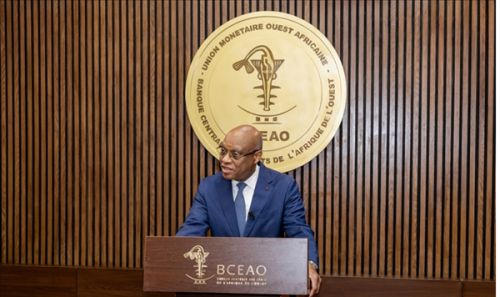
The Central Bank of West African States (BCEAO), the central monetary authority for the eight-nation West African Economic and Monetary Union (WAEMU or UEMOA) bloc, announced on Wednesday that it would maintain its key interest rates at current levels.1 The decision was reached during a regular meeting of its Monetary Policy Committee (MPC) in Dakar.
The BCEAO opted to keep the main rate at which it lends to commercial banks steady at 3.25%, and the marginal lending rate unchanged at 5.25%. These rates have been in effect since June 16, 2025. Additionally, the reserve requirement for commercial banks remains fixed at 3%.
Strong Economic Performance and Easing Inflation
The decision to hold rates steady was underpinned by a recent positive assessment of the bloc’s economic health, inflation trends, and external balance improvement.
Governor Jean-Claude Kassi Brou reported that economic growth within the WAEMU bloc remained robust in the third quarter of the year.2 Real GDP growth hit 6.6%, slightly up from 6.5% recorded in the preceding quarter. This strong expansion was attributed to several key drivers:
-
Domestic Demand: Sustained growth in household consumption and public investment.
-
Sectoral Output: Solid agricultural yields and firm output across the manufacturing, mining, and services sectors.
-
Credit Growth: Private-sector lending expanded by 6% year-on-year by the end of September, indicating sustained commercial activity.
Looking ahead, the Governor projected that growth for the full year 2025 is expected to accelerate to 6.7%, up from 6.2% in 2024.
Inflation Deflation and External Trade Improvement
A significant factor supporting the BCEAO’s decision was the sharp drop in inflation. The WAEMU bloc recorded a -1.3% inflation rate in the third quarter.3 This deflation was primarily driven by:
-
Easing Import Costs: Cheaper imported food and energy prices.4
-
Improved Domestic Supply: Better local supply conditions for essential goods.
Annual inflation is now projected to drop substantially to just 0.2% for 2025, a steep decline from 3.5% in 2024. Despite this positive trend, the BCEAO issued a caution that upward inflation risks persist, mainly due to ongoing geopolitical tensions and security challenges across the region.
Furthermore, the region’s external trade balance improved, supported by a 25% increase in petroleum output, strong global prices for key commodities like gold and cocoa, and lower import costs. The central bank also cited external financing raised by member states as a contributor to the strengthened external position.
The Monetary Policy Committee concluded by affirming its commitment to vigilance, stating it will remain alert to any risks that could threaten price stability or the region’s external position, and is prepared to intervene if needed to safeguard the monetary and financial stability of the WAEMU.5
