



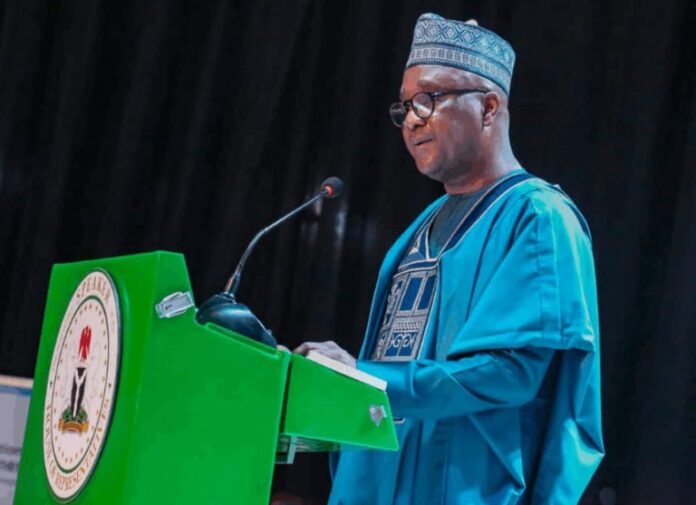
The Speaker of the House of Representatives, Tajudeen Abbas, has affirmed that Nigeria’s ambitious goal of becoming a trillion-dollar economy is fundamentally dependent upon the robust growth and empowerment of Small and Medium-sized Enterprises (SMEs).1 The Speaker made this declaration at the Enterprise Nexus Summit, emphasizing that the current administration’s economic blueprint places SMEs at the core of national development and wealth creation.
The Economic Significance of SMEs
The Speaker highlighted the massive role SMEs play globally and domestically:
-
Global Context: SMEs account for over 90% of businesses worldwide and contribute nearly 70% of employment in many developing economies.2
-
Nigerian Impact: Citing a PWC 2024 survey, the Speaker noted that SMEs constitute 84% of Nigerian businesses, represent 96.8% of registered enterprises, and contribute 48% to the national GDP.3
The “renewed hope agenda” aims to realize the trillion-dollar target over the next five years primarily by expanding opportunities for these small and medium-scale enterprises.
Legislative and Policy Support
Despite their economic importance, Abbas expressed concern over the high mortality rate of small businesses, with approximately half failing in their first year.4 The leading causes cited include limited access to credit, poor infrastructure, low technology adoption, and weak management capacity.5
To address these hurdles, the Speaker stressed the need for strong policy support, highlighting several ongoing legislative efforts:
| Legislative Effort | Primary Benefit for SMEs |
| Innovation and Entrepreneurship Support Bill 2025 | Establishes innovation hubs, tax incentives, and mentorship opportunities. |
| NEXIM Act Amendments | Designed to unlock $1 billion in trade opportunities for small-scale exporters. |
| Nigeria Tax Act 2025 | Provides zero per cent Companies Income Tax (CIT) for businesses with a turnover below ₦100 million. |
| Factoring and Invoice Discounting Bill | Improves working capital access by facilitating the use of future receivables. |
The Speaker also called for regulatory reforms to simplify complex licensing processes, reduce high compliance costs, and introduce more transparent tax processes.6
SMEs and Youth Empowerment
Brig Gen Buba Marwa (retd.), Chairman of the National Drug Law Enforcement Agency (NDLEA), also spoke at the summit, linking successful youth empowerment initiatives directly to effective drug-use prevention. He noted that structural barriers often limit young people’s access to sustainable livelihoods, citing a 2018 UNODC survey that showed 14.3 million Nigerians aged 15 to 64 had used psychoactive substances. Speakers collectively reaffirmed that strong, sustained reforms enabling SMEs to thrive are essential for boosting national productivity and serving as the largest employer of labor.
