


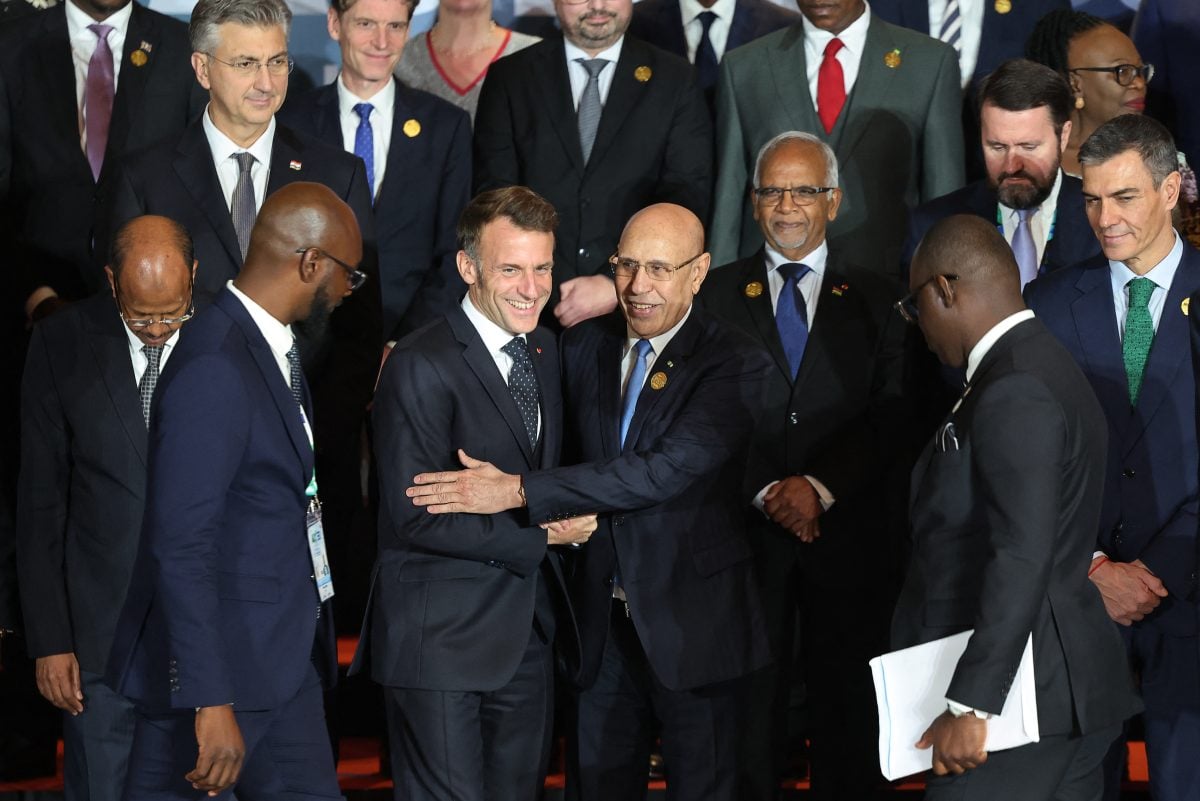
Motorcades glided along Luanda’s neon waterfront at dusk — past idle cargo cranes and half-built skyscrapers — before reaching the concrete pavilion perched above the bay that hosted the 7th African Union–European Union Summit. Inside, beneath banners promising “effective multilateralism,” dozens of African and European leaders gathered to rethink one of the continent’s most strategically important partnerships.
What emerged from the summit was more than a typical communiqué. For the first time, Europe formally endorsed Africa’s ambition to perform value-addition on critical minerals on the continent. It recognised the blue economy as a strategic priority and committed to supporting green-industrial hubs in Africa. These announcements signal a dramatic shift — away from decades of extraction-and-export toward co-investment, industrial cooperation, and shared value creation.
Europe’s New Stance: Support for Local Processing and Green Industrial Hubs
While the European Union (EU) has long been Africa’s largest trading partner and key export destination, critics have argued that the relationship has often favoured resource-exporting rather than industrial development. Under the new framework agreed in Luanda, Europe pledged to support “local and regional refining and processing of critical raw materials,” potentially unlocking funding and technical assistance for smelters, refineries, and battery-precursor plants across Africa.
This pivot is closely tied to broader European supply-chain reforms — following the 2023 adoption of the EU’s Critical Raw Materials Act, which aims to reduce reliance on single-country sources and diversify raw-material supply. The extension of that logic to Africa at this summit represents a tangible change in how Europe views its relationship with the continent. Observers argue this could be transformative. In particular, regional processing and value addition could translate into more jobs, higher domestic revenues, and the growth of manufacturing industries rather than perpetual raw-material exporting.
Concrete Investments and Infrastructure Plans under Global Gateway
The summit reaffirmed the joint commitment to deepen cooperation under the EU-Africa partnership. Under its flagship initiative, Global Gateway, the EU has pledged new investments targeting clean energy, transport corridors, infrastructure, and mineral value-chains across Africa. One recent example is support for mining and critical-raw-materials projects across several African countries announced by the EU earlier in 2025. These include projects in rare earths, battery minerals, and green-economy sectors — backed by financial and technical support.
Why This Matters: From Extraction to Industrialisation, Jobs, and Growth
Industry analysts say the shift could mark a turning point. The traditional model — where Africa supplies raw materials and imports finished products — rarely delivered broad-based prosperity. Now, by embedding refining, processing, and manufacturing within Africa, the continent stands to capture more value per ton, create skilled jobs, and build industries with longer-term sustainability. Moreover, such industrialisation aligns with broader global trends toward clean energy, electric vehicles, renewable infrastructure and green technologies — sectors that require minerals such as lithium, cobalt, nickel, platinum group metals, and rare earth elements, many of which Africa holds in significant quantities. Europe’s public and private finance arms appear open to this new approach. The European Investment Bank (EIB), for instance, is reported to be scaling up cooperation with African financial institutions and supporting projects in energy, mining, health, and infrastructure, under the broader joint EU-Africa framework.
Challenges and the Path Ahead: Execution, Risk-sharing, and Speed
While the shift in rhetoric and commitment is widely welcomed, analysts caution that success will depend on execution. As one European-Africa foundation leader said, “the real challenge lies in the last mile — turning promising pledges into bankable, investment-ready projects that deliver industrialisation, jobs and shared value.
Several African governments have already indicated alignment with this industrial vision. For example, many countries are embracing the Africa’s Green Minerals Strategy (AGMS) — a continental policy initiative that calls for mineral processing, green-technology manufacturing, and mineral-based economic transformation. Still, longstanding obstacles remain: regulatory hurdles, perceptions of risk, infrastructure deficits, and financing gaps. European and African leaders must therefore accelerate reforms, ensure transparency, and deploy de-risking mechanisms to turn ambition into reality.
