



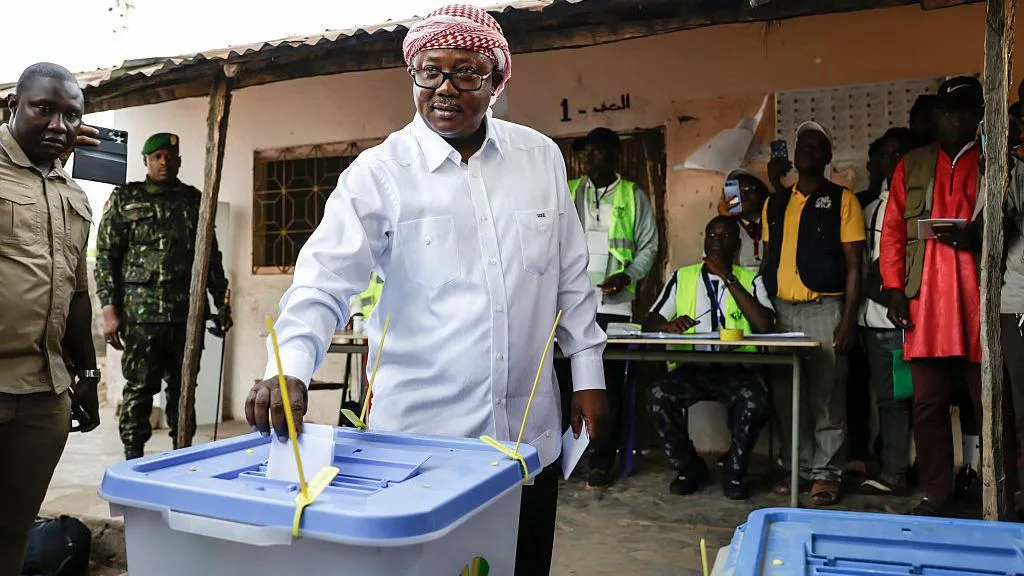
Several prominent West African political figures have openly questioned the legitimacy of the recent political upheaval in Guinea-Bissau, with both Senegal’s Prime Minister Ousmane Sonko and former Nigerian President Goodluck Jonathan suggesting that the supposed coup against President Umaro Sissoco Embaló may have been orchestrated rather than genuine. Their remarks follow a dramatic chain of events in which Embaló was reportedly removed from office by the military just one day before election results were scheduled to be announced.
The military has since halted the electoral process entirely, refusing to release the tally while claiming it intervened to prevent an alleged plot aimed at destabilising the already fragile nation. Despite these claims, Sonko and Jonathan both indicated that the events failed to align with normal coup patterns seen across the region. Neither offered concrete evidence but implied that the circumstances were suspicious, especially given Embaló’s history of using periods of unrest to tighten his grip on power.
Local civil society organisations in Guinea-Bissau have echoed these concerns, accusing the former president of staging a “self-coup” with the cooperation of sympathetic members of the armed forces. They argue that the timing—just hours before election results were due—suggests an attempt to avoid the possibility of electoral defeat. Embaló has not publicly addressed any of the allegations.
After his removal, the 53-year-old was transported to neighbouring Senegal on a military-chartered aircraft late Thursday, following what military leaders described as his “release.” Jonathan, who headed the West African Elders Forum observer mission during the election, dismissed the event as a real coup, labelling it instead a “ceremonial coup.” He questioned why Embaló was the first person to declare his own ousting—phoning France 24 to announce, “I have been deposed”—and compared this unusual sequence to the clearer, more forceful military takeovers seen recently in Mali, Niger, and Burkina Faso.
Prime Minister Sonko, speaking before Senegal’s parliament, described the entire episode as a political fabrication. Both he and Jonathan have demanded that Guinea-Bissau’s electoral commission publish the presidential results without delay, reinforcing widespread public speculation that the coup narrative was crafted to prevent transparency.
This controversy adds to Embaló’s long-standing reputation for political turbulence. He survived multiple coup attempts during his presidency, though critics have often accused him of exaggerating or inventing crises to suppress opposition. In December 2023, he dissolved parliament after a failed coup attempt, leaving the country without an active legislature for nearly a year.
On Friday, the country’s new transitional leader, Gen. Horta N’Tam, appointed former finance minister Ilidio Vieira Té as interim prime minister. The African Union quickly responded by suspending Guinea-Bissau from all AU activities due to the unconstitutional military takeover, a decision mirrored by the regional bloc Ecowas, which urged the military to step aside and restore constitutional order.
Guinea-Bissau has long been regarded as one of West Africa’s most coup-prone states, with chronic political instability compounded by its role as a transit hub for international drug trafficking networks. The military claimed it intervened this time to block unnamed politicians allegedly supported by a notorious drug trafficker.
Residents of the capital, Bissau, reported a mixture of fear, frustration, and resignation. One mother described hearing gunfire and scrambling to flee with her children as soldiers took control. Another resident, Mohamed Sylla, criticised the turmoil, saying the continued instability only “throws the country deeper into chaos.” Yet some citizens expressed cautious support for the military, hoping that the takeover might bring improved living conditions and a sense of order after years of political unpredictability.
As uncertainty continues, many in Guinea-Bissau are still waiting for clarity—especially the election results that were overshadowed by the sudden military intervention.
