

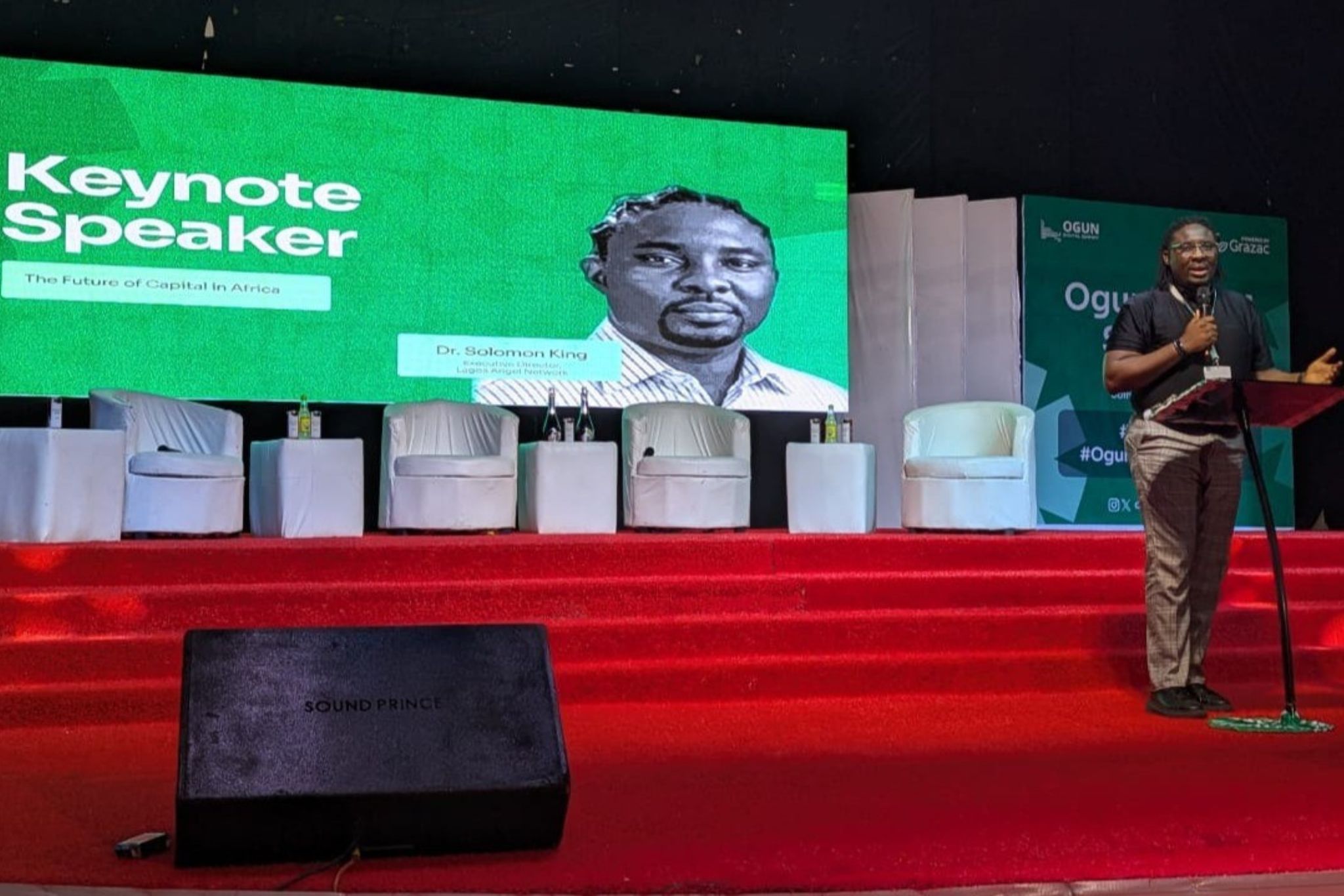
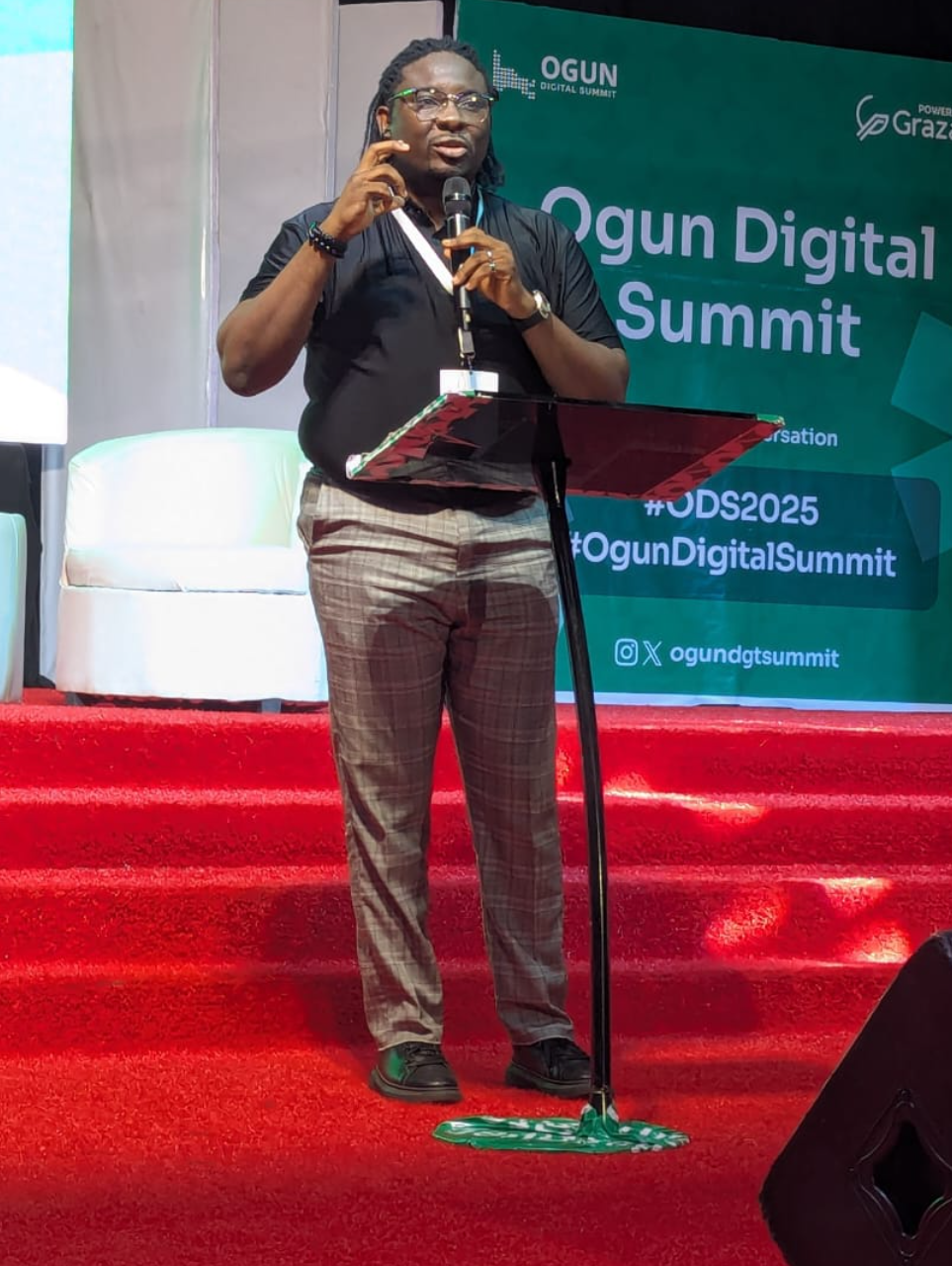
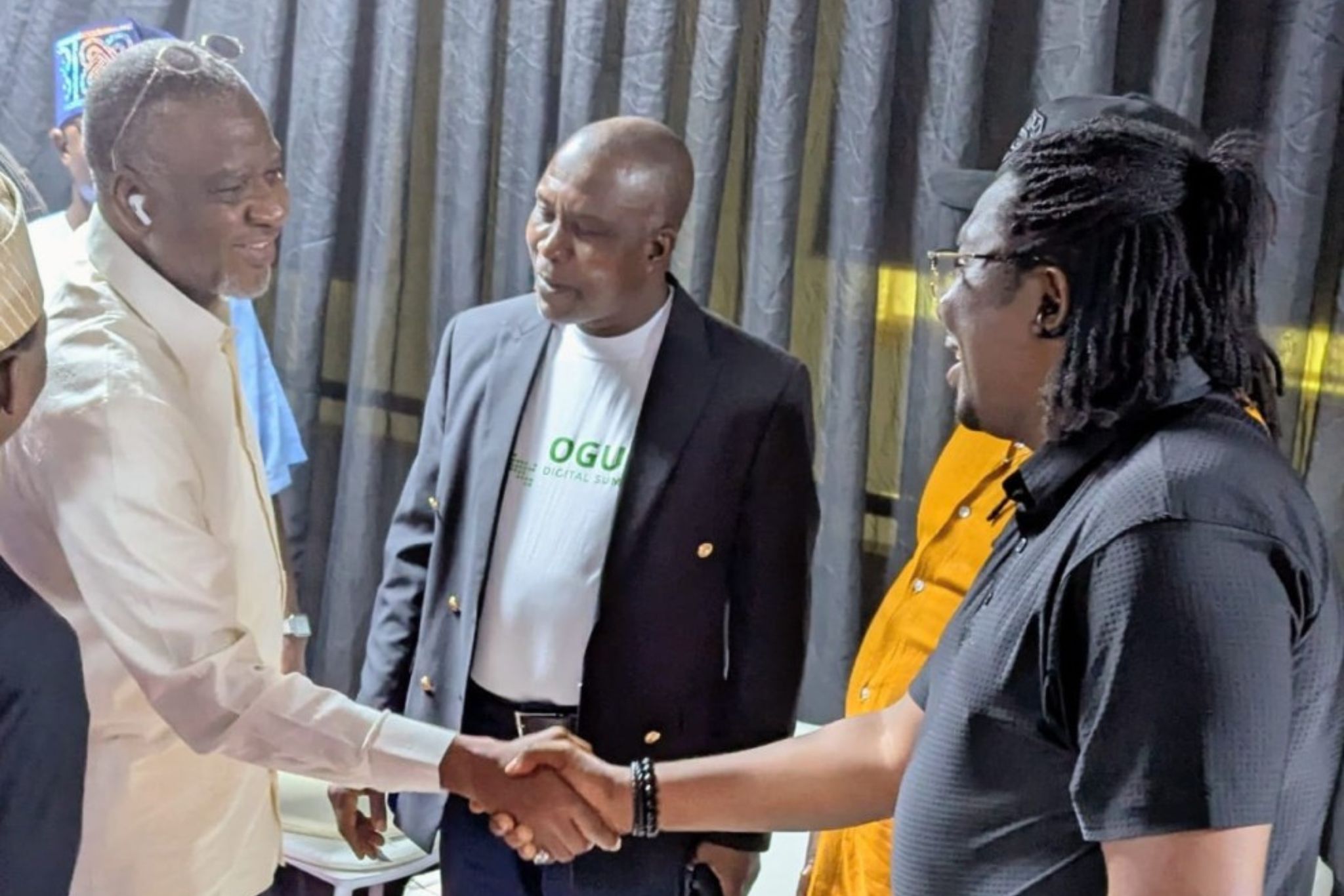
At the Ogun Digital Summit on Thursday, I spoke about something that is fast shaping the direction of the next decade of my career — the future of capital in Africa. The room was alive: young founders, builders, students, professionals, and curious minds eager to catch the next big wave in tech.
After my session, Pamilerin, a brilliant, confident, and clearly passionate tech griot — walked up to me. Midway through our conversation, he made a bold claim:
“Sir, at least 50 million Nigerians already understand Web3.”
I smiled. Because if you’ve lived in Nigeria long enough, you know that confidence doesn’t always come with coordinates.
So I asked him:
“My brother… are you saying one in every five Nigerians understands Web3 and uses it? Is that what you mean?”
He nodded. Others around him nodded too — that familiar nod people give when they want to belong, even if they’re not entirely sure what’s being discussed. A few others though, wondered what we were talking about, and I could see the confusion in their faces.
So I decided to test it. Right there, in the middle of the hall.
“Who here,” I asked, “can confidently explain what Web3 is — in one or two sentences?”
Silence. Nervous laughter. One person said, “Crypto?” Another: “It’s the new internet?” A third: “It’s… blockchain something?”
Out of nearly a dozen bright, digital-first Nigerians, not even three could give a clear answer. And this wasn’t a market square in Sagamu — this was a room full of educated, tech-aware minds. The very people Web3 evangelists often point to when talking about “adoption.”
That moment reminded me of something I’ve said many times:
Web3 in Nigeria is still an exclusive conversation — and exclusivity is the enemy of adoption.
So, What Really Is Web3?
Let’s strip away the noise.
The use and adoption of the internet has evolved over the years and web 1, web2, and web3 describe the chronological evolution through the years in terms of use cases and development of its features.
Breaking Down the Internet Generations
- Web1 (1990s–early 2000s): “Read only.” Static websites where you could consume information but not interact much. Think early Yahoo pages or online encyclopedias.
- Web2 (2000s–present): “Read and write.” Social media, apps, e-commerce. You can create, share, and interact — but big companies (Meta, Google, Amazon) own your data and control the rules.
- Web3 (emerging now): “Read, write, and own.” Built on blockchain, it lets users control their identity, data, and digital assets. Instead of relying on centralized platforms, you interact directly with others in a trustless, transparent way.
Own your identity. Own your data. Interact directly with people without gatekeepers. And do all of this with blockchain as the infrastructure.
In simple terms:
Web3 is the internet where you’re not just using the platform — you’re part owner of the platform.
Web3 at Play — Nigerian Edition
Imagine you and your friends contribute money to buy fuel for a generator. Normally, one person holds the cash, and everyone has to trust that he won’t “borrow small” before buying.
With Web3, that contribution could sit in a shared digital wallet controlled by a smart contract. Nobody can touch it except for the agreed purpose — buying fuel. The record is transparent, everyone can see it, and no middleman is needed.
Or think about sending money to your cousin in Ibadan. Instead of going through a bank that charges fees and delays, Web3 tools could let you send value instantly, peer-to-peer, without gatekeepers.
That’s the promise: ownership, transparency, and trust built into the system itself.
The “50 Million Users” Myth
Big numbers are seductive. They look good in press releases. But inflated numbers create two problems:
- Founders and investors overestimate traction — and underinvest in education and onboarding.
- They create a false sense of arrival — as if the work is already done.
The truth? Nigeria doesn’t even have 50 million active digital banking users yet. How can we jump to 50 million Web3 users?
At best, maybe 3–5 million Nigerians understand Web3 concepts. Far fewer are active daily users. And that’s fine. Adoption is a journey, not a headline.
Web3: A Private Members Club?
Ask the average Nigerian what Web3 is, and you’ll hear:
- “Crypto traders in hoodies.”
- “Telegram groups asking for 20k to start.”
- “Twitter guys arguing about airdrops.”
- Or worse: “That thing that swallowed my cousin’s savings.”
Why? Because nobody has broken it down cleanly, simply, and in the language of ordinary people.
Instead, the Web3 community often builds walls:
- Telegram groups that feel like secret societies
- Discord servers that require initiation
- Conversations that start with “DeFi, ZK-rollups, scaling layers…”
- Events that assume everyone already understands everything
This is why, despite the hype, Nigerians haven’t embraced Web3 the way we embraced GSM, USSD transfers, agency banking, or instant payments. Those products met people where they were. Web3 expects people to climb a hill to join.
Nigerians Are Not Afraid of Tech — We Just Need It to Make Sense. We adopted GSM in record time. We embraced transfers, USSD, POS terminals, savings apps, ride-hailing, online payments.
Why? Because they were:
- Useful — they solved real problems.
- Simple — anyone could use them.
- Trusted — people believed their money was safe.
Web3 hasn’t crossed those three barriers yet.
- Useful? Not clearly. Too abstract, not enough daily relevance.
- Simple? Not even close. Onboarding alone intimidates graduates.
- Trusted? Definitely not. Nigeria is the global capital of “platform disappeared with my money.”
Until Web3 solves these three, adoption will remain stuck.
What Web3 Builders Must Do
If Web3 is ever going to take root in Nigeria, builders must change the way they approach people. It begins with language. Too often, pitches sound like UN reports — heavy with jargon, acronyms, and abstract promises. But adoption doesn’t happen in PowerPoint slides; it happens when ordinary people understand you. Speak in normal English. If your product can’t be explained in two sentences to a bus conductor or a market woman, it’s not ready.
Then, build for Nigeria as it is, not as you imagine it. Create practical use cases that fit daily life: sending money to a cousin, splitting bills with friends, saving for rent, borrowing small amounts, paying artisans, tracking receipts. These are the things Nigerians already do every day — Web3 should make them easier, safer, and cheaper.
But none of this matters without trust. Nigerians carry deep scars from fake platforms and vanished investments. Trust here is not a feature you add later; it is the foundation you must build on. Without it, no amount of innovation will survive.
Also, please step out of the echo chamber. If your entire user base lives on Crypto Twitter or Telegram groups, that’s not adoption — that’s a clique. Real adoption happens when you leave the comfort of online debates and take Web3 into real communities: churches, schools, polytechnics, markets, campuses. That’s how mobile money scaled. It didn’t stay in tech conferences; it went to the streets.
In short, Web3 builders must stop speaking to themselves and start speaking to Nigerians (Africans). Use clear language, solve real problems, rebuild trust, and meet people where they are. Only then will Web3 move from hype to habit.
In the end…
No, Nigeria does not have 50 million Web3 users. We barely have enough informed users to fill a handful of stadiums.
And that’s fine. Because adoption is not a press release — it’s a process.
If we want Web3 to thrive here, we must start with clarity, simplicity, and honesty. We must bring the conversation down from the clouds to the real world. Speak to Nigerians in their language. Solve Nigerian problems. Build with humility.
Only then will Web3 become what it was meant to be — an internet owned by the people, not a clique.
SPECIAL MENTION:
David Lanre Messan (DLM) : Ore mi…. That Amala Lafenwa was banging! The Akara in the morning was the banger!!
Victor Olaleye & the #ODS Team: You guys pulled off a great feat. Thank you for the deliberate hospitality! Welldone!!
