



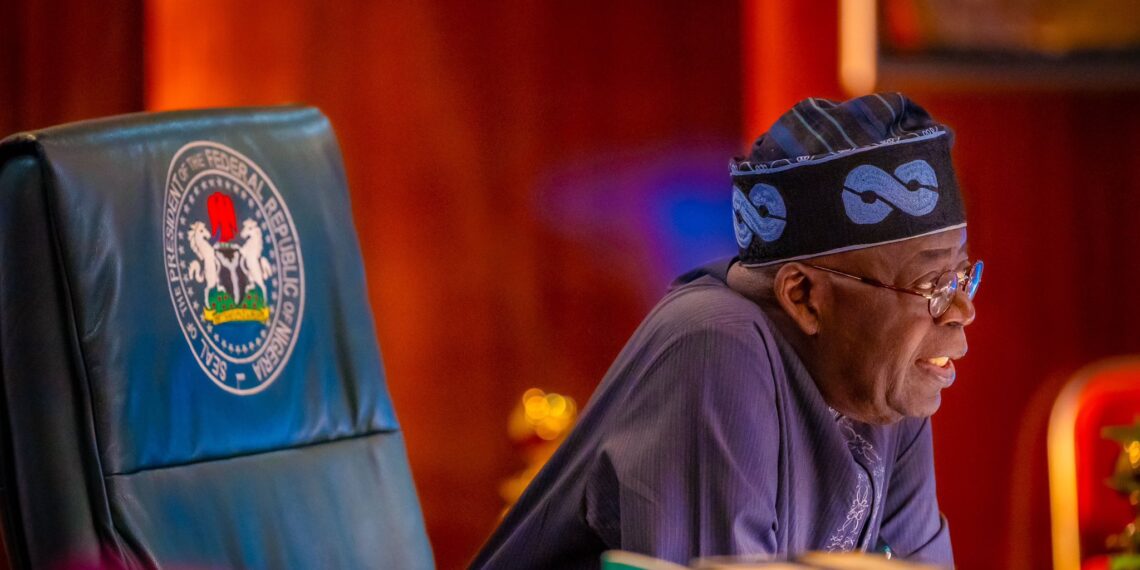
Nigeria has strengthened its call for Africa to obtain permanent, veto-wielding representation on the United Nations Security Council, insisting that meaningful reform of global governance structures has been delayed for far too long. The renewed push was delivered by President Bola Ahmed Tinubu during the first plenary on Peace, Security, Governance and Multilateralism at the 7th African Union–European Union Summit held in Luanda, Angola.
Speaking on behalf of the President, Vice President Kashim Shettima emphasized that any modern global system must reflect the political and demographic realities of the 21st century. He stressed that African nations—home to over a billion people and increasingly central to global security—cannot remain excluded from the highest decision-making body responsible for international peace.
Tinubu also encouraged the European Union to adopt a more collaborative approach in its peace and security engagement with Africa. He argued that security solutions must be co-created with African partners and anchored in African-led structures to ensure long-term stability.
Boko Haram: Mass Surrenders Highlight New Security Dynamics
In presenting Nigeria’s progress in the fight against violent extremism, the President revealed that early 2025 saw more than 250,000 individuals affiliated with Boko Haram voluntarily surrender. This development, he noted, reflects the effectiveness of Nigeria’s combined kinetic operations and non-kinetic de-radicalisation approaches.
“It is time for Africa to take its rightful place on the UN Security Council—with all accompanying privileges, including the veto,” Tinubu declared. He urged EU Member States to support Africa’s decades-long demand for Security Council reform and to back text-based negotiations within the Intergovernmental Negotiations (IGN) process.
Security Pressures Demand Urgent, Collective Action
President Tinubu outlined a range of security pressures—armed conflict, illicit weapons flows, climate-related stress, irregular migration, and political fragility—arguing that these emerging threats require deeper cooperation between continents.
While acknowledging the EU’s long-standing support since the establishment of the African Peace and Security Architecture in 2002, he cautioned that instability across regions continues to enable terrorism, organised crime, and extremist recruitment. He cited the Multinational Joint Task Force (MNJTF) in the Lake Chad Basin as a successful example of African-driven cooperation.
“As of early 2025, over 120,000 Boko Haram-linked individuals—including family members—have surrendered,” he added, highlighting growing momentum against insurgent networks. Tinubu also referenced the recent Sea-Lift Agreement between the Nigerian Navy and the AU Standby Force, describing it as a key step toward improving Africa’s rapid-response capabilities in crises and peacekeeping.
Addressing Irregular Migration Through Structured Mobility
On irregular migration, the President argued that punitive approaches have worsened insecurity, rather than solving it. He called for partnerships that recognise economic drivers of migration and promote safe, regulated pathways such as labour mobility schemes and cross-continental skills exchanges.
“Seasonal mobility has been central to West African civilisation for centuries,” he said. “What we must do is transform it into safe, orderly, and mutually beneficial systems.”
Democracy Under Pressure: Nigeria Establishes RPD
Tinubu condemned the resurgence of Unconstitutional Changes of Government (UCGs) across Africa, warning that external forces often exploit fragile political systems. To address this, he announced the creation of the Regional Partnership for Democracy (RPD)—a joint initiative of Nigeria and neighbouring countries aimed at strengthening democratic institutions, countering extremist ideology, and supporting governance reforms.
He also spotlighted worsening crises in Sudan and South Sudan, calling for accountability for foreign actors who contribute to conflict escalation and advocating for renewed diplomatic engagement.
Opposition to Private Military Actors
Reiterating Nigeria’s earlier position, the President warned against the use of private military contractors in African conflicts, arguing that such actors frequently complicate peace processes and undermine national sovereignty.
Tinubu reaffirmed the EU’s importance as a strategic partner, especially at a time when global commitment to multilateral cooperation appears to be weakening.
“Nigeria remains steadfast in its mission to promote peace, stability, and democratic governance across Africa,” he concluded, extending gratitude to the Government and people of Angola and expressing appreciation for the EU’s consistent support to AU-led peace initiatives.
