

Nigeria’s education system faced intense public outcry earlier this year when the West African Examination Council (WAEC) released the initial 2025 O’Level results, revealing that just 38.32% of candidates secured a passing grade. The announcement triggered nationwide debate as critics questioned the dedication of students, the competence of schools, and the overall state of the educational sector. Although WAEC later clarified that a system malfunction had distorted the first set of results—revising the pass rate to slightly above 60%—the episode reinforced a reality many already knew: secondary school learning in Nigeria requires urgent reform.
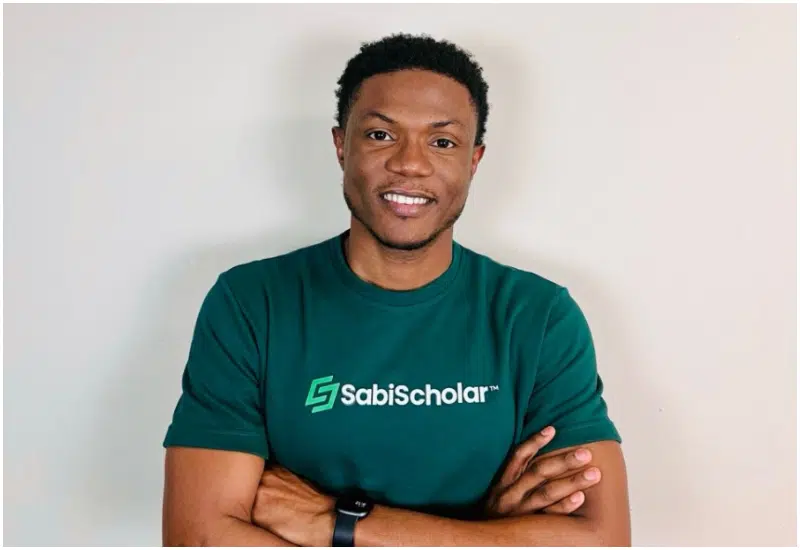
It is within this context that tech entrepreneurs Divine Iloh and Ebuka Osunwoke co-created SabiScholar, an AI-enhanced, offline-first learning platform designed specifically for secondary school students across Africa. Their mission is to bridge persistent learning gaps, especially in environments where digital access is unstable or unreliable.
Speaking in an exclusive conversation with Techpoint Africa, co-founder Divine Iloh—who holds a Nigerian technology patent for a low-bandwidth educational delivery system—explained the inspiration behind the platform. The idea, he noted, started nearly two years ago when he and his partner questioned why students still needed to physically visit centers like the National Open University for learning, even though such institutions were supposed to offer seamless online education. This concern led them to uncover a larger issue: even secondary school learners had limited access to effective online lessons and UTME preparation tools. Recognizing this massive gap, they set out to build a solution that would make reliable digital learning accessible to every student, regardless of connectivity challenges.
A core strength of SabiScholar lies in a newly approved patent that directly addresses Nigeria’s poor network infrastructure. Iloh, who hails from Enugu State, elaborated on how the platform uses intelligent network-prediction technology to overcome connectivity barriers. According to him, the AI engine analyzes each user’s network pattern and identifies the hours when signal strength is typically strongest—often between midnight and early morning. During this window, the system automatically downloads videos, quizzes, assignments, and learning materials needed for the following days or even weeks. This means students can enjoy a fully functional learning experience on the go, even when they have little to no internet access during the day.
By merging AI innovation with a deep understanding of local challenges, SabiScholar is positioning itself as a transformative tool for Nigerian education—one capable of empowering young learners, strengthening exam preparation, and reducing the barriers that have long hindered digital learning in the country.
