



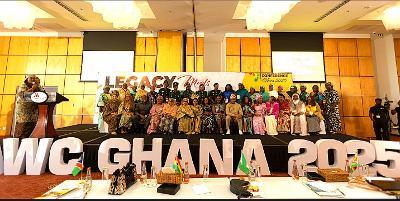
The 9th Africa Women Conference (AWC), held in Accra, Ghana, concluded with the adoption of a series of bold, continent-shaping resolutions designed to strengthen women’s leadership, expand economic independence, deepen digital participation, and accelerate long-term cultural transformation across Africa.
Organised by the Helpline Social Support Initiative, the conference brought together a highly diverse group of participants—ranging from government officials and entrepreneurs to development experts, artists, technology innovators and youth representatives. This year’s theme, “Legacy Meets Innovation: Women Forging New Pathways for Africa’s Sustainable Development,” set the tone for a forward-looking dialogue exploring how African women can shape a more equitable and prosperous future.
Key Resolutions and Commitments
In a communiqué delivered by veteran Nigerian actress and communications professional Rekiya Ibrahim-Atta, delegates stressed the urgent need to dismantle long-standing systemic barriers that continue to hinder women’s progress. They asserted that women must be fully represented in political, academic, corporate, and traditional leadership structures if Africa is to meet its development goals.
To achieve this, the conference called for the strengthening of inclusive leadership frameworks—including affirmative action, gender-responsive policies, and leadership pipelines that support women entering decision-making positions. Another major focus was the need for intergenerational mentorship, with participants agreeing that established leaders should intentionally guide and collaborate with young innovators who often lack access to career-shaping networks.
Digital transformation was also central to the discussions. Delegates resolved to broaden digital literacy by integrating STEM training into community-based programmes, especially in underserved rural areas. They further highlighted the importance of creating innovation hubs that nurture and accelerate women-led tech enterprises.
On cultural reforms, the communiqué emphasised the collective responsibility to eliminate discriminatory traditions and legal frameworks that limit women’s rights. Delegates insisted that African culture must evolve in ways that uplift women’s dignity, talents, and full participation in society.
Economic empowerment formed another critical pillar. Participants committed to expanding financial access for women through tailored lending schemes, cooperatives, digital banking tools, and investment funds designed specifically to support female entrepreneurs.
A standout achievement of AWC 2025 was the launch of a Pan-African Women’s Film Initiative, aimed at telling authentic African women’s stories, amplifying feminist narratives, and strengthening representation in the creative industries.
Celebrating Women’s Leadership and Vision
In a goodwill message delivered on behalf of She Forum Africa, Founder Inimfon Etuk praised the conference for demonstrating the “power of unity and the shared determination to elevate women’s leadership.” Represented by Mrs. Asiya Sani Sulaiman, Etuk reaffirmed that investing in women translates to investing in Africa’s collective progress.
Adding a heartfelt voice from the younger generation, Little Miss Kogi, Queen Aishat Salau Audu, delivered a moving address on behalf of African children. She celebrated African women’s resilience and urged leaders to continue creating opportunities for the next generation—stressing the importance of guidance, protection, and pathways that future leaders can build upon.
Dr. Jumai Ahmadu, AWC Co-Convener, expressed deep appreciation to Ghana for its warm hospitality and applauded partners and volunteers for their vital contributions. She encouraged participants to return home with renewed commitment—to mentor younger women, support girls’ education, promote STEM participation, and uplift women-run enterprises.
A Catalyst for Africa’s Gender Transformation
Participants unanimously agreed that the resolutions adopted at AWC 2025 present a powerful roadmap for accelerating gender progress across Africa. With renewed commitments to leadership inclusion, digital empowerment, economic participation, cultural reform, and mentorship, many believe the continent is better positioned to deliver measurable change ahead of the next conference.
The delegates concluded with a shared vision: that by the time AWC convenes again, Africa will celebrate tangible impacts shaped by the decisions, partnerships, and commitments forged in Accra.
