



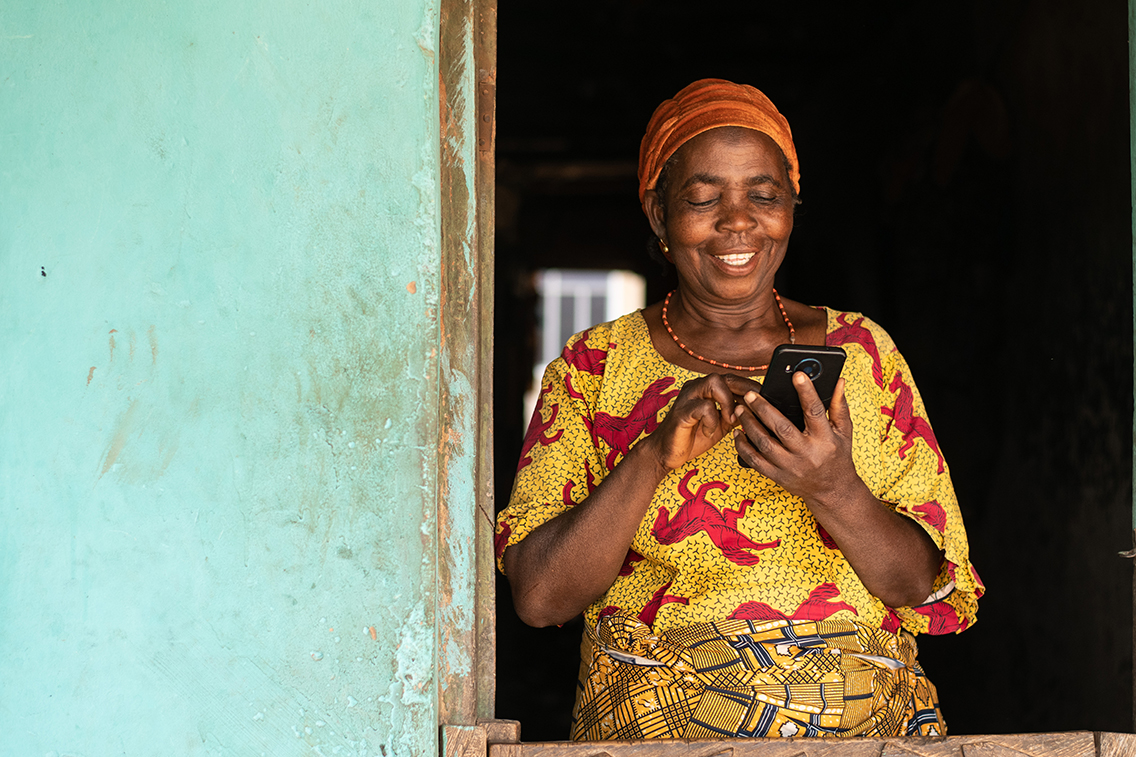
Mobile money remains one of Africa’s most celebrated home-grown technological achievements, transforming financial behaviour, broadening inclusion, and creating new business models. In several African nations, mobile money has become so entrenched that it rivals cash as a primary means of transaction. At the Bloomberg Africa Business Summit 2025 in Johannesburg, journalist Yinka Ibukun recalled attempting to book a flight from Accra to Lagos and being presented with only two payment options: cash or mobile money. Few technologies have achieved such widespread adoption across the continent.
As digital adoption accelerates and consumer expectations continue to evolve, policymakers, investors, and businesses are increasingly asking: what comes next? A panel of technology experts at the summit explored emerging innovations likely to define Africa’s next decade, examining how these tools can be effectively tailored to the continent’s development priorities.
Africa’s Digital Momentum
Lexi, General Partner at Northken22—a venture fund backed by 35 global tech founders managing billion-dollar enterprises—argued that Africa’s greatest appeal lies not only in its youthful and growing population but also in its market inefficiencies. Fragmented systems and untapped sectors create fertile ground for innovation. As digital infrastructure improves, longstanding challenges in payments, identity verification, logistics, and financial services are becoming solvable at scale. Investors are increasingly motivated by the opportunity to develop the continent’s next globally significant companies.
Three key areas are gaining particular traction. First, digital identity is emerging as an essential infrastructure layer, following Africa’s early leadership in mobile payments. Effective digital ID systems can enhance credit access, strengthen verification processes, and serve as a foundation for more advanced digital services. Second, the creative and media economy is expanding rapidly. African creators—from musicians to gamers—are leveraging digital platforms to reach audiences both locally and internationally, attracting significant investor attention. Third, blockchain technologies and stablecoins are transforming financial flows, offering practical solutions to fragmented payment systems and enabling more efficient cross-border transactions.
AI for Development
Representing OpenAI, Emmanuel highlighted the importance of deliberately designing artificial intelligence solutions for African markets. In partnership with the University of Lagos, OpenAI launched the OpenAI Academy, providing accessible learning on generative AI and emerging digital tools tailored to African contexts. High enrollment demonstrates strong demand for quality technical training. OpenAI is also deploying AI solutions across sectors, including agricultural productivity with Digital Green and maternal healthcare improvement with Jacaranda Health, illustrating AI’s potential to strengthen critical services across Africa.
To broaden accessibility, OpenAI introduced ChatGPT Go, a lower-cost subscription model priced to reflect African purchasing power—around 149 rand in South Africa and 7,000 naira in Nigeria—supporting digital inclusion objectives across the continent.
A New Backbone for African Financial Flows
While AI is receiving global attention, digital payments specialist Chris argued that stablecoins represent the most immediate financial innovation in Africa. Last year, stablecoins processed nearly $17 trillion in transactions, surpassing Visa and Mastercard combined. Africa is among the fastest-growing markets, with six of the top 20 adopting countries located on the continent.
Stablecoins address a major challenge: the dominance of the U.S. dollar in international trade, which often involves slow, costly cross-border transfers through multiple intermediaries. Stablecoins enable near-instant, low-cost transfers of digital dollars, benefiting traders, SMEs, and remittance recipients. Chris compared the stablecoin revolution to the early adoption of online banking: institutions that ignore the shift risk being left behind.
Shaping Africa’s Next Digital Transition
A recurring theme at the summit was adaptation. Africa’s success with mobile money stemmed from technologies designed to match local realities—cash-heavy economies, limited banking infrastructure, and informal markets. Emerging technologies like AI, blockchain, and digital identity systems have enormous potential, but their impact will depend on how effectively they are adapted to African constraints and opportunities.
Structural challenges such as fragmented logistics and identity gaps should be viewed as catalysts for innovation rather than barriers. The coming decade offers Africa a chance not just to adopt global technologies but to shape them, setting new standards in financial services, digital identity, and AI-powered public services. Mobile money demonstrated Africa’s capacity to leapfrog legacy systems; the next wave, from stablecoins to Africa-relevant AI models, could firmly establish the continent as a global leader in transformative, adaptive technologies.
