



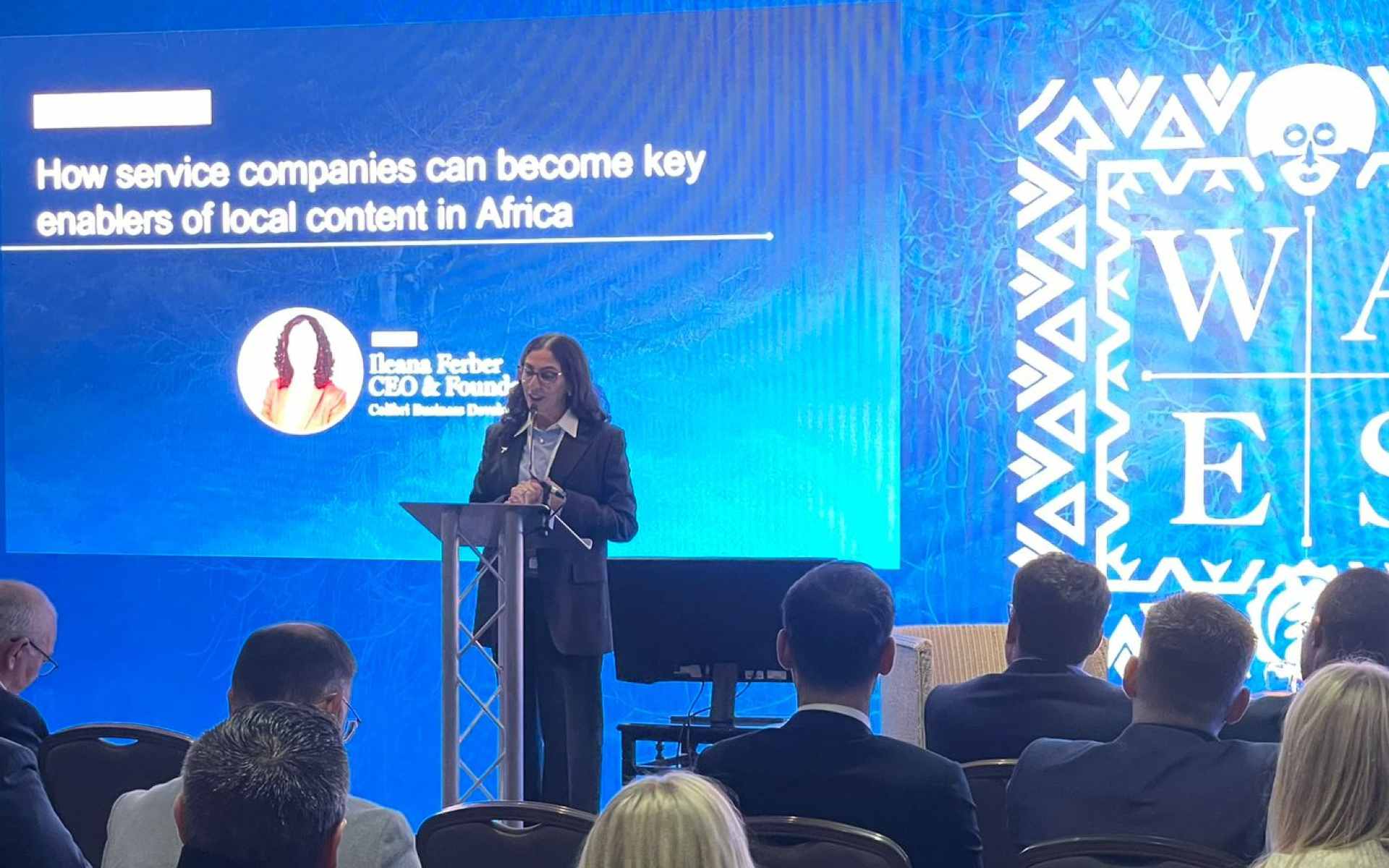
The recent Wider African Energy Summit in Aberdeen — held in collaboration with the African Energy Chamber — placed a strong spotlight on how global service companies can accelerate local content development across Africa’s energy landscape. As African nations push to strengthen domestic participation in their oil and gas sectors, service companies are increasingly being recognized as strategic partners capable of driving long-term economic impact.
During the summit, Ileana Ferber, CEO and Founder of Colibri Business Development LLC, delivered a presentation outlining how service providers can act as a catalyst for sustainable industry growth. She explained that Africa’s expanding energy value chain, from exploration to midstream logistics, creates significant opportunities for both international and homegrown service firms.
“Service companies can become a key enabler of local content in Africa,” Ferber said. “Beyond the upstream space, there is massive potential in midstream infrastructure. As the sector evolves, service companies serve as the bridge between operators and suppliers, helping unlock new economic and technical opportunities.”
This comes at a time when several African countries are shifting their energy strategies. While upstream exploration has historically dominated investment, governments are increasingly prioritizing midstream and downstream development to improve refinery capacity, enhance regional trade, boost fuel availability, and build stronger domestic markets. This transition is opening new avenues for local content — including job creation, procurement opportunities for local suppliers, workforce training, and the transfer of valuable skills and technology.
Ferber highlighted the core pillars of effective local content:
-
Human capital development, covering both technical and soft skills;
-
Supplier and SME capability building, ensuring local firms can meet international industry standards;
-
Technology transfer initiatives, aimed at expanding practical knowledge, research capabilities, and innovation across African markets.
However, she also acknowledged several challenges associated with local content regulations. Many policies across the continent, she noted, lack meaningful industry engagement during development. This can result in targets that are unrealistic, exceed current domestic capacity, or become impractical during certain stages of project execution.
“Local content requirements can be prescriptive, with minimal collaboration with the private sector,” Ferber said. “Targets can be unachievable and may hinder progress if not aligned with existing capabilities. But when well-designed, these policies can stimulate infrastructure development, create incentives for industrial expansion, and support programs that uplift SMEs and underrepresented groups.”
As African energy markets continue to expand and diversify, the role of service companies is becoming increasingly central. Their ability to connect international expertise with local ecosystems places them at the forefront of Africa’s broader economic transformation — shaping a future where local content is not just a regulatory obligation, but a competitive advantage and a pathway to shared prosperity.
