



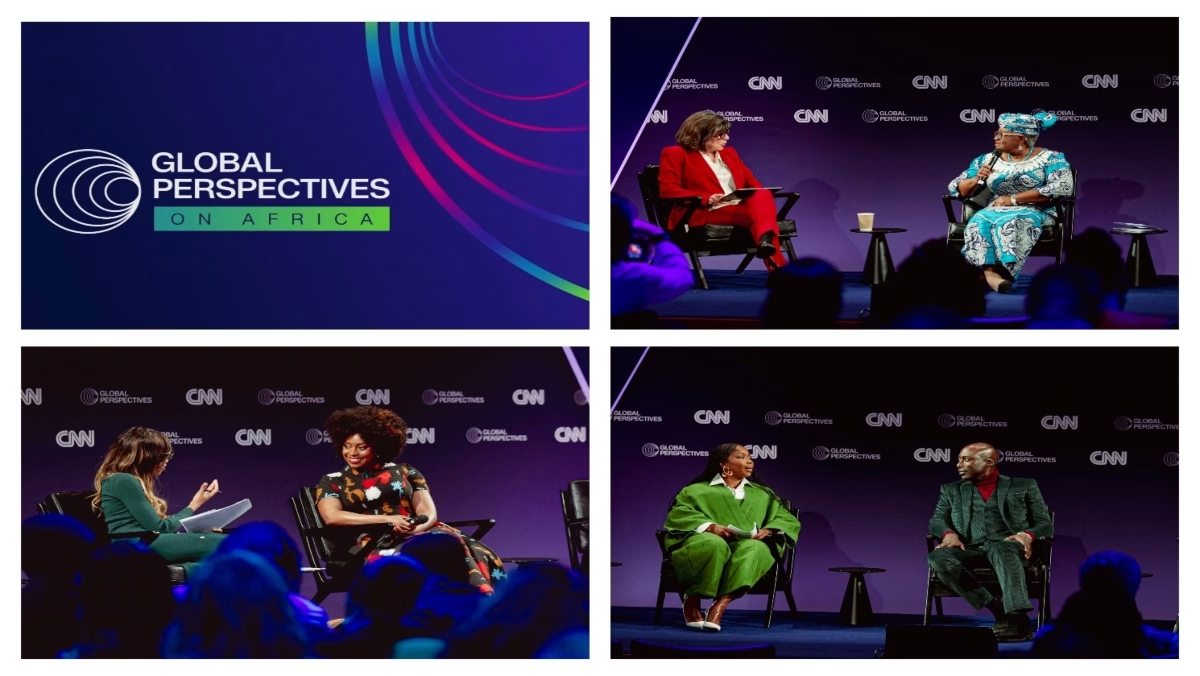
CNN has released a special half-hour programme highlighting key moments from its first-ever Global Perspectives: On Africa event. Hosted by Zain Asher, the broadcast captured standout interviews, major conversations, and insights from influential political leaders, business pioneers, innovators, and respected thinkers shaping Africa’s future.
In a global environment increasingly defined by geopolitical tensions, shifting tariffs, and rapid technological change, the World Trade Organisation (WTO) continues to play a stabilising role. Its Director-General — and former Nigerian finance minister — Dr. Ngozi Okonjo-Iweala was among the headline speakers at the event. In a conversation with CNN’s Christiane Amanpour, she emphasised Africa’s growing economic potential, noting: “The IMF forecasts about 4% growth for Africa next year — nearly one percentage point above global growth. By 2050, the continent will house around 2.5 billion people. That demand represents future market power. Africa shouldn’t be viewed as poor, but as a rising market where early business and trade relationships will matter.”
Speaking with Asher on the sidelines, Dr. Okonjo-Iweala also addressed the future of global cooperation. She called for an upgraded, more agile version of multilateralism that responds to emerging realities such as AI and new economic pressures. She stressed that the WTO must reform to stay adaptable and to better serve Africa and the rest of the world.
Europe’s Ambassador to the African Union, Javier Niño Pérez, echoed the urgency of recognising Africa’s global significance. He told Asher that Africa deserves a greater presence in international decision-making, arguing for deeper inclusion in global economic and political bodies: “Africa should have its rightful place — in trade, in investment, and as a full member of platforms like the G20 and even the UN Security Council.”
While new partnerships emerge, persistent conflicts continue to challenge regional stability. In the Democratic Republic of the Congo (DRC), peace remains fragile. DRC Prime Minister Judith Suminwa Tuluka urged Rwanda to commit to a ceasefire, telling CNN’s Melissa Bell that peace is essential for the nation’s progress: “Only peace can move the country forward.”
Philanthropist and businessman Mo Ibrahim reinforced this point, telling CNN’s Jim Sciutto that conflict has consistently failed African citizens. He highlighted the continent’s youth as the driving force for meaningful change, noting their education, connectivity, and potential to reshape politics: “If young Africans formed a political party, they could win power everywhere.”
The programme also spotlighted Africa’s expanding cultural influence. British-Ghanaian designer Ozwald Boateng, known for bringing African aesthetics to London’s iconic Savile Row, discussed his fusion of classic British tailoring with West African symbols and colours. He described his work as deeply spiritual, reflecting a creative essence that runs through many African artistic traditions.
Boateng added that this blend of creativity, spirituality, and meaning offers a unique advantage in a world increasingly shaped by technology and AI. He believes African creatives naturally operate in this space of expressive depth and cultural identity.
To round off the event, celebrated Nigerian author Chimamanda Ngozi Adichie joined Asher on stage. She urged African storytellers to embrace confidence and assertiveness, insisting that African narratives belong at the centre of global storytelling — just as others place their cultures at the forefront.
