


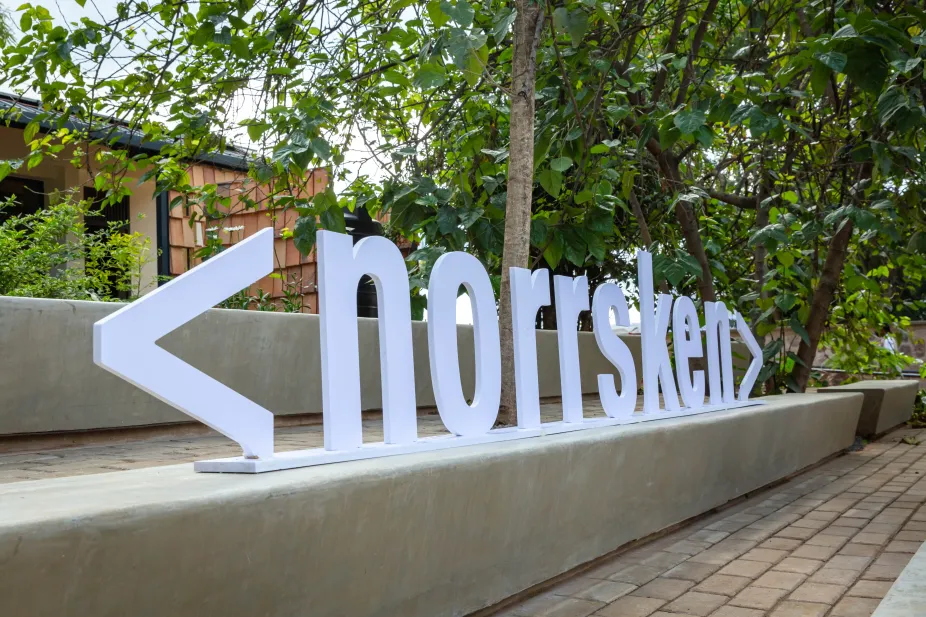
The investment environment for expansion-stage companies in Africa is receiving a major boost as the Pan-African venture capital entity, Norrsken22, announces the definitive closing of its first fund. The firm successfully raised a total of $205 million, significantly surpassing its original fundraising target. This accomplishment clearly signals sustained strong interest from institutional financial backers in providing crucial support to African startups as they enter key phases of their operational journey.
Norrsken22 was co-founded by five individuals with deep backgrounds in both venture capital and private equity. The team includes founding partners Niklas Adalberth and Hans Otterling, along with managing partner Natalie Kolbe and general partners Ngetha Waithaka and Lexi Novitske. The firm, which has been operating for nearly two years, maintains dedicated operational teams in strategic locations across the continent: Nigeria, South Africa, Kenya, and Ghana.
The partners officially launched the fund, known as the Norrsken22 African Tech Growth Fund, in January of the previous year after achieving an initial close at $110 million. Approximately fifty-nine percent of this initial funding was secured from a diverse group of thirty founders of global unicorn companies, notably including Flutterwave CEO Olugbenga Agboola, Skype co-founder Niklas Zennström, iZettle co-founder Jacob de Geer, and Delivery Hero co-founder Niklas Östberg.
Norrsken22 began its capital-raising efforts during a time characterized by a rapid surge in investment flowing into the global technology sector. The firm initially planned to reach its final close by the end of 2022, following intensive discussions with several development finance institutions (DFIs) and family offices, which is a necessary step for mobilizing substantial capital in Africa. However, the investment landscape globally has since shifted dramatically, leading to a general pullback that has impacted fundraising efforts everywhere, including among institutional investors. For context, while venture capital activity in Africa reached between $5 billion and $6 billion in 2022, it subsequently diminished to a range between $2.5 billion and $3.4 billion in 2023, based on figures from The Big Deal and Briter Bridges, underscoring the broader deceleration in VC activity.
This ongoing global slowdown in technology investments contributed to a one-year delay for Norrsken22 to finalize its close. Nevertheless, achieving this milestone is particularly remarkable given the widespread challenges many venture capital firms, both globally and locally, continue to face in securing or closing their funds. What is even more notable is that the growth fund was oversubscribed. Managing partner Kolbe attributes this success partly to a resurgence in fundraising momentum observed at the start of 2023. She also credited the extensive experience of Norrsken22’s founding team in African investments, along with the foundational backing provided by limited partners who were founders of unicorn startups, as critical factors in attracting sustained interest and financial support for the fund.
After the fund’s initial closing, which included support from the SEB Pension Foundation and several family offices, Norrsken22 successfully attracted prominent new limited partners, such as British International Investment (BII), the International Finance Corporation (IFC), U.S. International Development Finance Corporation (DFC), Standard Bank, and Norfund.
The fund is primarily focused on investments in Series A and B rounds. While large international funds typically dominate the most substantial deals in Africa, local investors often concentrate on earlier stages—from pre-seed to Series A—with smaller to medium-sized funds. Large Africa-focused funds like Norrsken22 are strategically positioned to bridge the capital gap that exists between the growth and late stages of investment. Kolbe stated that approximately fifty percent of Norrsken’s capital will be allocated to building its core portfolio of Series A and B companies; the remaining capital will be reserved for follow-on investments, mainly targeting the Series B and C rounds.
In a public communication, the firm affirmed its focus on “entrepreneurs developing fintech, edtech, medtech [health tech], and market-enabling solutions that will deliver strong returns and have a positive impact across Africa.” The Pan-African growth-stage fund has already deployed capital into five companies, including the challenger bank TymeBank, the B2B commerce retail platform Sabi, the identity verification solution Smile Identity, the auto financing platform Autochek, and the financing application for informal merchant communities, Shara.
Kolbe elaborated on Norrsken22’s investment thesis: “The kind of value that we bring is for companies that are looking to grow beyond their borders and building up multi-country, Pan-African businesses. Having three general partners in the beacon economies of sub-Saharan Africa: Nigeria, Kenya and South Africa, we were able to provide the companies with people on the ground and networks on the ground, and we also understand the nuances of growth and opportunity in each of our markets.” She added that these startups are often seeking a financial partner who can provide a large initial check, follow on in subsequent rounds, and anchor those funding rounds, a necessity that has become even more pronounced as capital liquidity on the continent has tightened.
Norrsken22 intends to invest in a portfolio of around 20 startups. The fund’s typical investment ticket size averages approximately $10 million, though it may extend up to $16 million when including follow-on rounds in specific portfolio companies, as previously indicated by the partners.
Preparing for successful exits is a central component of any growth-stage fund’s investment strategy. Kolbe confirmed that Norrsken22 rigorously evaluates potential exit scenarios, including proactively working to identify potential acquirers for its portfolio companies and assessing the valuations these companies might achieve at the end of the firm’s investment lifecycle. This meticulous due diligence is deemed essential, and the firm has been willing to decline investments when a compelling exit case could not be clearly demonstrated.
The managing partner suggested that the firm envisions exits for its portfolio companies through several avenues: international strategic buyers, industry consolidation involving established local market leaders, and acquisition by large multinational corporations operating within Africa. These corporations often find it difficult to innovate organically and may seek to acquire innovative tech businesses for integration or as separate entities under new branding. Norrsken22’s inaugural fund benefits from an advisory council composed of influential business leaders from multinational companies across sectors such as banking, telecommunications, agriculture, and real estate.
