



PalmPay, a leading African digital bank and financial technology platform, is currently engaged in discussions to raise a significant Series B funding round, which is expected to land between $50 million and $100 million, according to multiple sources knowledgeable about the company’s plans. While the specific valuation sought in this round has not been made public, PalmPay’s most recent fundraising in 2021 already positioned it as one of the continent’s most highly valued startups, hovering just below the coveted billion-dollar unicorn status.
Though a spokesperson for the six-year-old fintech declined to comment directly on the ongoing fundraising specifics, they confirmed that the company is “in a strong financial position and exploring growth opportunities.” Notably, PalmPay, which has successfully raised nearly $140 million across its Seed and Series A rounds, is now reportedly profitable, a rare and important achievement in the high-growth African tech ecosystem, according to sources familiar with its financial performance.
The new capital is anticipated to be a combination of equity and debt financing. These funds will be strategically deployed to fuel PalmPay’s aggressive expansion goals: deepening its already dominant footprint in Nigeria, substantially scaling its newer offerings tailored for businesses, and systematically rolling out both consumer and business products into fresh markets across Africa and into Asia.
The fintech recently announced it has achieved a major operational milestone, hitting 15 million daily transactions driven by its growing user base of 35 million registered users. The total monetary value of these transactions now aggregates to “tens of billions of dollars” on an annual basis, according to the company’s own metrics. Furthermore, revenue has experienced a powerful surge. PalmPay’s revenue, which stood at $64 million in 2023 according to the Financial Times, has reportedly more than doubled since then, demonstrating remarkable commercial growth and user adoption.
Launched in 2019, PalmPay initially focused its efforts on Nigeria, which is Africa’s most populous nation and a major regional fintech hub. At that time, more than half of the country’s adult population was unbanked, and traditional banking institutions primarily served salaried or formal-sector clients, often employing requirements that excluded the mass market. PalmPay recognized the immense opportunity to reverse this model, building a digital bank from the ground up that was specifically optimized for the practical realities of Africa’s informal economy. They launched an application that featured instant user onboarding, zero transfer fees, and a continuously growing array of services—including credit, savings, insurance, and bill payments—all meticulously tailored to meet the day-to-day needs of underbanked consumers and small businesses.
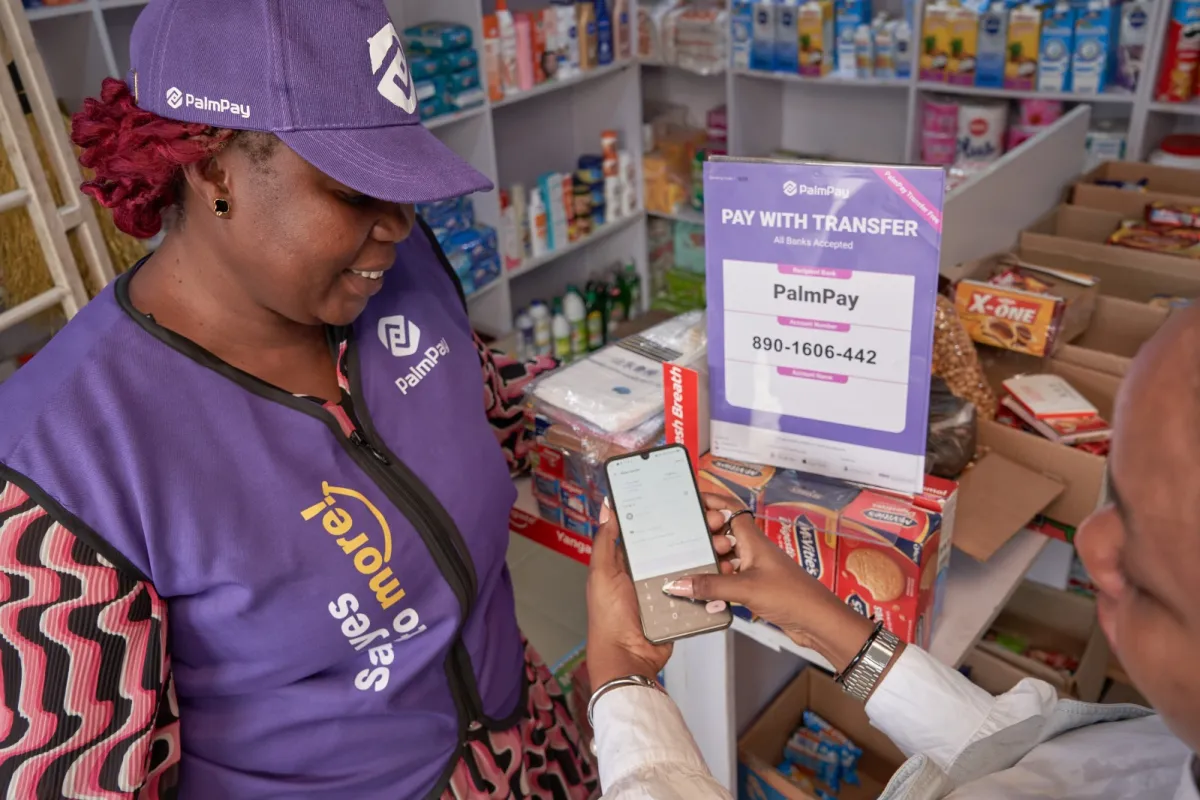
Crucially, PalmPay’s strategy did not rely exclusively on digital user acquisition. The fintech invested heavily in constructing a vast, on-the-ground network of over 1 million small businesses and agent merchants. These physical touchpoints now serve more than 10 million customers monthly through the PalmPay Business app and dedicated point-of-sale (POS) devices, which are essential for offering cash-in and cash-out services in cash-dominant economies. This successful hybrid model, combining digital apps with physical distribution, has also been adopted by other major domestic fintechs, including OPay, Moniepoint, and Paga.
PalmPay asserts that it processes more transactions daily than any traditional commercial bank in Nigeria. For consumer accounts, 25% of its users report that the PalmPay account was the first financial account they have ever owned. For credit products, offered in partnership with licensed third-party lenders, the number of first-time borrowers jumps to a significant 60% among borrowers, it claims.
Part of PalmPay’s strong distribution and aggressive marketing advantage stems directly from its foundational partnership with Transsion. This Chinese phone manufacturer dominates African smartphone sales, holding a market share of over 40% across its popular brands, including Tecno and Infinix. Through this partnership, the PalmPay app is pre-installed on select financed smartphones, a powerful strategy that effectively drives organic user acquisition and engagement from the moment a customer buys their phone.
Having firmly established itself as one of the country’s most widely used fintech applications, PalmPay is now strategically preparing to duplicate its successful model in new international markets. The neobanking platform has already expanded its operations to Tanzania and Bangladesh (marking its inaugural foray outside Africa). In these new territories, PalmPay is wisely entering the market using device financing and consumer credit as initial “wedge” products before layering in its broader suite of financial services. This strategy mirrors the successful international expansion efforts of other African digital banks, such as FairMoney, MNT-Halan, and TymeBank, which have moved into Asia with varying degrees of success. The company also confirmed via its spokesperson that it plans to introduce its device financing product in its home market of Nigeria soon.
While Transsion, which led PalmPay’s seed round, remains a vital strategic partner, the company’s spokesperson confirmed that the fintech is also actively exploring potential collaborations with more original equipment manufacturers (OEMs) to further diversify its distribution channels. Other high-profile investors in PalmPay include GIC (Singapore’s sovereign wealth fund) and MediaTek, one of the world’s largest mobile chipset makers.
On the business-facing side, PalmPay has launched a critical service offering cross-border payments for merchants. This product allows businesses to seamlessly send and collect payments across various African countries via a single API, addressing a long-standing pain point in regional commerce. This recently launched business feature, which is currently live in Nigeria, Kenya, and Tanzania (with South Africa slated to be in the pipeline), already processes “hundreds of millions of dollars monthly,” according to the company’s spokesperson.
